-1

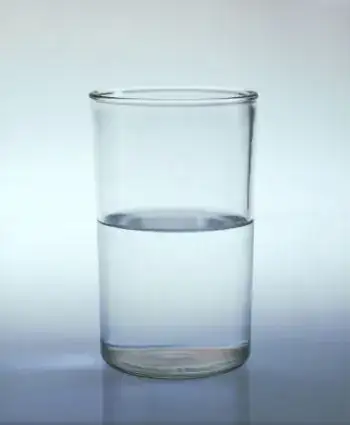
Glass with water

If someone asks me this, is there some proper answer according to English grammar?

If there is, what is it?

If not, shouldn't there be one? And which one?

P.S. I am not asking this for fun. This thing is driving me crazy. It has left my mind half empty, or half filled? Whatever..

  • This appears to be a false question since I would expect to compare filled with emptied and on the other hand full with empty. – Mishax May 09 '14 at 15:39
  • @Mishax What? I didn't quite get that... – user3459110 May 09 '14 at 15:51
  • 2
    this question is not about grammar – Oldcat May 09 '14 at 18:02
  • Voting to close. This question is unconnected with the English language, rather it is asking for people's opinions. There is no right answer; everything depends on context, on your mood that day, whether you want to use the idiom "He's a glass half-full type of guy" or illustrate that somebody is a born pessimist etc. etc. – Mari-Lou A May 09 '14 at 18:18
  • According to English grammar, "the glass is half full", "that's a beautiful orange kitteh" and "ow my balls" are all equally valid answers. You might wish to start by looking up what grammar means. – RegDwigнt May 09 '14 at 18:44
  • For what it's worth, there's a good video somewhere on the web which demonstrates that a glass which is genuinely half empty (that is, which had a strong vacuum in one half) will usually be crushed by surrounding air pressure. – keshlam May 09 '14 at 19:43
  • I knew this would get on hold. I would edit it sometime to make it more clear. Let it be so until then... – user3459110 May 10 '14 at 06:42
  • if you put a box over it, it becomes indeterminate! – JMP Sep 29 '17 at 06:21

1 Answers1

4

As a very general rule, when describing a thing, it is a good idea to describe what is there, rather than what is not there. In the absence of any context whatsoever, therefore, I would choose to call the glass half filled (or half full, as tends to be more common).

However, we almost never write or speak without any context whatsoever. It may be more appropriate to emphasize the partial emptiness of the glass--for example, if there are multiple full glasses and we wish to emphasize the one that is not full. Or if the glass being filled halfway implies that it has been partially drunk--that is, that it was once full but has been half emptied. The important point to take away is that the purpose of any language is to communicate ideas, and you should choose the wording that best conveys the ideas you wish to communicate.
phenry
  • 18,259