12

What do you call those household items whose selling features are purportedly practical, functional and ‘innocent’ but instead are often bought for completely different, and sometimes ‘naughty’ reasons?

In time the makers hear of this secondary use and exploit this “extra” feature, or modify the design in order to meet public demand, without confessing the real reason behind it.

I'm thinking in particular of those massage instruments sold for “back pain” such as the one below. Nowadays, we'd simply call it a vibrator, but until the mid-fifties these gizmos were called massagers

dated back masager

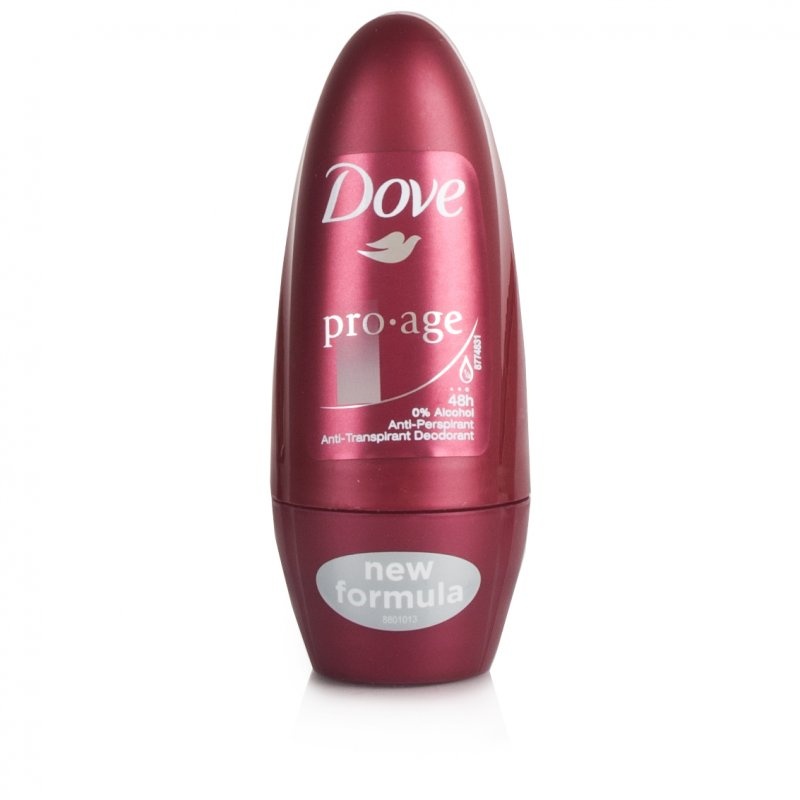
Today on supermarket shelves there are certain roll on deodorants (for both sexes) whose size and friendly ergonomic shapes are unequivocally sexual. I suppose there aren't that many taboos left but the fact that one can openly display a deodorant stick in one bathroom's cabinet without embarrassment is very convenient…

On a much more serious note, there are certain cough medicines that are sold over the counter that customers discover have secondary/hidden benefits (initially anyway).

Some over-the-counter (OTC) and prescription cough and cold medicines contain active ingredients that are psychoactive (mind-altering) at higher-than-recommended dosages and are frequently abused for this purpose.

Dextromethorphan (DXM), a cough suppressant and expectorant found in many OTC cold medicines. It may produce euphoria and dissociative effects or even hallucinations when taken in quantities greater than the recommended therapeutic dose.

Promethazine-codeine cough syrup, a medication that contains codeine, an opioid that acts as a cough suppressant and can also produce relaxation and euphoria when consumed at a higher-than-prescribed dose.

enter image description here … cough syrups, pills, and gel capsules containing DXM—particularly “extra strength” forms—are frequently abused by young people (who refer to the practice as “robo-tripping” or “skittling”).

National Institute on Drug Abuse

  • What do you call products whose hidden or secondary function is really its selling point? I might call them double entendre products, but do manufacturers have their own jargon?

  • What do you call any product whose secondary use (or abuse) is accidentally discovered and then becomes its raison d'être. Any product can fall in this category. In the comments below, Tushar Raj suggested bubble wrap which has become famous for being a stress reliever, and less so for its primary purpose: wrapping fragile objects.

Mari-Lou A
  • 91,183
  • 1
    Don't forget the reason guys buy lotion for! – Tushar Raj May 12 '15 at 17:23
  • 1
    Ahh yes, baby mineral oil is another one... – Mari-Lou A May 12 '15 at 17:25
  • 1
    To answer the 2nd part, I don't believe they have any special name. They just become known for their primary use and their intended use becomes a factoid. Like bubble wrap or post-it notes. – Tushar Raj May 12 '15 at 17:25
  • 1
    I usually like your questions and your answers, and I respect you as a knowledgeable, well-established, high-rep user, but I find the insinuation that some medicines are intentionally marketed to be abused insulting. What your examples talk about is illegal abuse, and the effects mentioned are adverse (undesired) effects, not benefits. They are mostly not hidden, and they are not a selling point of any medicine. HCPs work their asses off trying to help people, and this is what we get for it? – Lucky May 12 '15 at 19:07
  • 4
    I think the word ostensibly is our friend here. – John Lawler May 12 '15 at 19:19
  • @Lucky - I don’t think you can accurately characterize this OP’s forthright assertions as “insinuation.” Do you really find it preposterous to think that for-profit corporations would stoop to innuendo and subliminal expression in the advertising and marketing of their products? Really? You’ll probably find this site rather exasperating if you find the thoughts of others “insulting.” –  May 12 '15 at 20:13
  • There's always going to be someone who's offended. I write a question about a woman who's feeling moody, I'm accused of being sexist. I ask a question related to Indian English, I'm a racist. I ask a question on the double usage of different products, and suddenly I'm slagging off medical research. – Mari-Lou A May 12 '15 at 20:23
  • 1
    It seems that you and @LittleEva misunderstood my comment. I did not object out of mere difference in opinion and I didn't think your intention was to slag medical research (at least I hope it wasn't). There is a case of mixing apples and oranges in this question. Some consumer products can be marketed for ostensible use and cause no harm, but medicines are an exception. This is why they are not a good example here. No one markets cough medication as easy-to-acquire narcotics. Really. Without these examples this would be a very interesting question. Or two - one for scientific serendipity. – Lucky May 12 '15 at 21:16
  • @Lucky What do you call any product* whose secondary use is* accidentally discovered... I am asking about any product in general, I gave two solid examples, one frivolous, the other more serious and from what I have read very contemporary. People will abuse anything given half the chance, and if that provides them a form of escapism and pleasure, even more so. – Mari-Lou A May 12 '15 at 21:57
  • 1
    That's a good question... If new use is beneficial - I'd use serendipity. If it's not - well, that's a bummer :-). Any new use (better or worse than the old one) I don't know. I just think that those serious examples are about a sensitive issue and the answer bellow shows that they lead the people who try to answer in the wrong direction. – Lucky May 12 '15 at 22:02
  • Mari-Lou, there are virtually no products being sold “whose secondary use is accidentally discovered”. In my experience, @Lucky, all commercial products, including “medications,” are developed and marketed primarily for monetary gain and only after exhaustive research and testing, with full Corporate awareness of the product’s effects upon the body and the mind. What some might term unintended or ancillary effects, are in fact known and intended effects, part and parcel, so to speak, of the “experience”--- they are the product the manufacturer has chosen to sell. –  May 12 '15 at 22:25
  • 1
    @LittleEva No, I'm completely with Mari-Lou on this one: products are researched but there are to many variables to be tested in pre-marketing phase. New uses for general products (indications for medicines) are often discovered later. E.g. there was no need to explore what would happen if you put a certain antihypertensive on your hair. It turns out it promotes hair growth :-). This happened even more often in the past, so there might be a word for it. As for the adverse effects that's a topic for another stackexchange site. Btw, I don't get your use of quotation marks... – Lucky May 12 '15 at 22:45
  • Well, @Lucky, you're certainly welcome to your opinions, but in retort I'll give you one example, one already mentioned, that of cough medicines, whose narcoleptic effects on the human body and mind are certainly well-known by the corporations who sell them. Financial concerns that market products whose effects are unknown to them don't last too long. –  May 12 '15 at 22:59
  • @LittleEva As I have said, adverse effects are a complicated issue which is way off-topic here. This is exactly why I objected to medical examples in the first place. They are difficult to explain while staying on-topic, technical terms overlap with words in common usage (and non-professionals get them mixed-up) and health is a sensitive issue. Anyway, let's not get too chatty in the comments, OK? – Lucky May 12 '15 at 23:11
  • If you are after double entendre, try "personal digital assistants". Of course, digital here refers to fingers, not computation. – jxh May 14 '15 at 21:19
  • 1
    The USES of such products could be called “collateral uses” (‘collaterally damaging uses’ or just ‘collateral damages’ for abusive uses; and “collaterally beneficial [or benign] uses” or just ‘collateral benefits’ for non-abusive [read pleasurable] uses), but it’s too early in the morning for me to try to work “collateral” into a term describing such products themselves (which is how I interpret, perhaps incorrectly, what you are seeking). – Papa Poule May 25 '15 at 15:07
  • It appears your focus is on the fact that these products 'secondary' usage has actually replaced the original one and sales are actually influenced by their ''ancillary usage', am I correct? –  May 25 '15 at 16:51
  • 1
    I confess it. I use (split) rubber stick ferrules as clips to keep the shower curtain anchored. And darts as pressure-washer-nozzle cleaners. And holders for washed cutlery as holders for pens etc. And a tea strainer with two clothes pegs as a coffee-filter-paper holder (I can't find a replacement nylon filter). And bike tyre-levers as gardening trowels. But I doubt that these applications are common. I did use foam-backed pan scourers to remove old gloss paint before I saw them marketed for the purpose. – Edwin Ashworth May 25 '15 at 22:09
  • 1
    @Mari-LouA: Actually, I was referring to the fact that bubble wrap was originally designed to be used as wallpaper, but your example works too. Bubble-ception! – Tushar Raj May 25 '15 at 22:10
  • 1
    *The 5 Most Insane Original Uses of Famous Products* http://www.cracked.com/article_19644_the-5-most-insane-original-uses-famous-products.html –  May 26 '15 at 08:26
  • @TusharRaj I've only just now seen the link. It's really interesting, I had no idea about its original usage, and that it was invented in 1957, I thought it was much later. – Mari-Lou A May 26 '15 at 17:24
  • @Josh61 that's more like it. products that became famous for their "newly" discovered properties. I wish I had seen that cracked.com link before posting my question :) – Mari-Lou A May 26 '15 at 17:32
  • @EdwinAshworth you're onto a winner there And holders for washed cutlery as holders for pens etc I have always lusted for a tall solid stationery holder. And I have one, right on my kitchen sink. Thank you! – Mari-Lou A May 26 '15 at 17:36
  • ulterior motive? – Crosscounter May 28 '15 at 19:11
  • 1
    There are actually quite a few products that are sold with labeling that indicates that they are intended for some purpose other than the one to which they will be put. Radar detectors for speeders, for example, may stipulate that the radar detection is for informational purposes only—not to evade laws against speeding. My favorite example, though, is the bottles of 190-proof grain alcohol whose label specified "FOR EXTERNAL USE ONLY"—items that were (as far as I know) available only at liquor stores. I call the nominal use given on the label a "cover identity"—like the ones spies adopt. – Sven Yargs May 29 '15 at 06:53
  • @SvenYargs all very good examples, but is there really 190-proof alcohol? In Italy, supermarkets sell the 95% pure alcohol. I thought that was pretty strong... The ingredients are for chocolate liqueur. – Mari-Lou A May 29 '15 at 07:08
  • 95% alcohol = 190 proof alcohol, I believe. I have heard (though I haven't checked the details recently) that the proof system entailed proving that the alcohol really accounted for a certain proportion of the liquor, and that at 100 proof (50% alcohol) it would ignite when exposed to a flame. Hence also (perhaps) "firewater." But this is all received information, and may be grossly inaccurate. – Sven Yargs May 29 '15 at 07:18
  • @SvenYargs I do quite like cover identity, it does suggest that there are secondary uses and abuses. – Mari-Lou A May 29 '15 at 07:31
  • 1
    Not an answer, but such massagers I have quite recently seen marketed in Greece. According to my mother-in-law, your insinuation that they are anything else than an innocent massage apparatus is ridiculous. She was shocked at the idea that my better half and I would see any other use for that product! – oerkelens May 29 '15 at 09:35

7 Answers7

20

"Off-label use", per Wikipedia: "is the use of pharmaceutical drugs for an unapproved indication or in an unapproved age group, unapproved dosage, or unapproved form of administration."

I think it would be understood if use of the other items in your posting (massager, cough medicine) were referred to as "off-label" also. I'm not sure there is one hypernym for all of these non-drug types of products, but it wouldn't be a stretch to say that all of these "types" of products have additional "off-label" uses.

  • Nice one. Upvote. But do you think it applies to products that aren't drugs? – Tushar Raj May 12 '15 at 17:32
  • Well, @Area51DetectiveFiction, I know that if I were in mixed company, I'd probably say the "massager" has another, more common "off-label use" instead of guffawing and saying, "Ha! We know why someone REALLY buys that product!" lol! – Kristina Lopez May 12 '15 at 17:42
  • 1
    Hmm. Since label isn't specific to drugs, I think you might get away with using it in other contexts. My upvote stands. – Tushar Raj May 12 '15 at 17:43
  • 1
    @Lucky, the link is for Wikipedia's article on "off-label use" is specifically addressing drugs and their intended use as well as their off-label use, which is why I included it...to lay the foundation for the expression and it's origin. The use of the term "off-label" for other non-drug products is simply extrapolating the contextual and understood usage of the term to new uses, such as the "massager". While it's off-label use is generally understood to be a sexual aide, I don't recall implying that "off-label use" is any sort of euphemism for "naughty". – Kristina Lopez May 12 '15 at 19:01
  • To emphasize another part of the cited Wikipedia article: "According to the British General Medical Council, off-label prescriptions must better serve patient needs than alternatives and must be supported by evidence or experience to demonstrate safety and efficacy." – Lucky May 12 '15 at 19:42
  • 2
    This answer is off-label. – Edwin Ashworth May 25 '15 at 22:12
  • Off-label has certainly become commonly used for things other than drugs. – Catija May 27 '15 at 19:52
6

I think unintended use conveys the idea in general. The phrase is used both informally and formally. For example, it is used in International Product Liability as a formal phrase.

There is also a website called Museum of unintended uses and the motto is the art of using things differently.

Here are some clever examples from the same site:

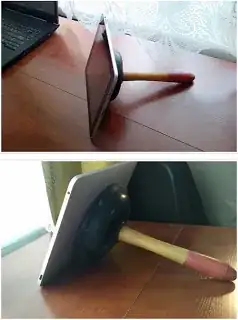
Ipad Stand:
enter image description here

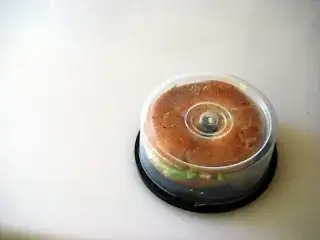
Bagel-to-go:
enter image description here

The smart professor doctor Chairman:
enter image description here

Sports cycles:
enter image description here

ermanen
  • 62,797
6

I can't think of a term for the products themselves, but the act you describe might be called repurposing, which Wikipedia defines as follows:

Repurposing is the process by which an object with one use value is transformed or redeployed as an object with an alternative use value.

Quillmondo
  • 1,608
2

For your first question, all such products, even if their "hidden" (unadvertised) collateral uses are beneficial and/or benign, but especially if they’re damaging could be called “misused///misapplied products.” I doubt, however, if manufacturers would use these negative terms to market such products.

On the other hand, although slightly 'oxymoronic' with negative connotations to boot when used to describe certain family members, perhaps using “overly helpful products” (with a wink and a nod) for products whose collateral uses are beneficial could help capture/emphasize (and take advantage of) the notion that they have beneficial uses that were not originally intended, e.g., "You'll find our overly-helpful deodorant/back massager good for what ails ya."

For your second question, having been the product of “serendipitous innovation,” you could perhaps call a product whose accidently discovered “serendipitous use” has become its recognized and advertised raison d’être a “serendipitous product.”

Although "serendipitous product" could also be used for a product with hidden beneficial uses (question 1), I think it would also require a wink and a nod.

To avoid having to literally do the winking and nodding yourself, you could modify ‘product’ with a word (in its sense as a verb) that already contains the winking notion [and which could even be seen as having its own double (mis-) entendre (Arun's review), if not multiple ones] e.g.:

Discover your own/(or ‘Discover a world of’) serendipitous uses for our highly “intimating///intimative product.”

Frankly, in spite of all my attempts above, I find that your suggestion of “double entendre products” captures very well the notion you seek in question 1, as perhaps would synonyms/near-synonyms for it:

“allusive//insinuative//‘innuendal’//polysemous(mic) products” and the like.

Papa Poule
  • 9,697
1

You describe illicit uses for these products.

The synonyms are easy to look up. Illicit's the best fit here.

stevesliva
  • 6,607
  • 1
    Illicit is a synonym for illegal. This is an inappropriate term for at least two of the asker's examples. – Yang May 29 '15 at 07:39
  • @Yang, no, it isn't. It is not a perfect antonym of legal. If we ignore connotation, then we're not speaking English. The abuse of legal drugs is illicit, and the question specifically mentions them. – stevesliva May 29 '15 at 16:53
  • Fine, illicit is a slightly broader term than illegal, and you're correct that it includes the abuse of otherwise legal drugs. A word meaning "not permitted by law" is nonetheless a tremendously poor fit for what the questioner is looking for - "a product whose primary function is unadvertised". It's a technically correct description of only one of three examples mentioned, and does not describe the relevant feature even in that example. – Yang May 29 '15 at 17:52
  • @Yang -- it's clearly a broader term than you understand it to be. Calling them illicit uses is entirely appropriate if you understand the word. Go google the OED examples. "illicit fifths" when describing music. "illicit love." "illicit passion." I doesn't mean "illegal." It can mean unsanctioned, or not doctrinaire. It describes the relevant features, and that's all I've suggested. "Products with illicit uses" is far broader a term for what is asked for than "products with off-label" uses, as far as I'm concerned. – stevesliva May 29 '15 at 20:38
  • Definition of illicit, "forbidden by law, rules, or custom." The excessive use of over the counter medicines is not forbidden; there is no rule or law which condemns anyone from becoming incredibly drunk and intoxicated, it is perfectly legal to be drunk in the privacy of one's home. – Mari-Lou A May 30 '15 at 16:34
  • @Mari-LouA, using drugs against their intended use is most definitely is forbidden by rules and custom-- the rules and customs of the FDA and the manufacturer's lawyers. That's exactly why it's illicit and not illegal and the words aren't perfect synonyms. Take a look at google's #1 hit for "illicit drug use." It includes inhaling the NO2 from aerosol whipped cream... which may be legal or not, but it's an illicit use of Reddi-whip. There are reasons the makers did not condone these uses, and it's because someone finds them illicit. Not illegal, but illicit. – stevesliva May 31 '15 at 04:49
1

The term used in marketing is 'lead user innovation'. You can look at the work of Eric von Hippel at MIT for more information on this concept. Basically Hippel noticed that in many cases it was users who were innovating with products and he developed a methodology that marketers could use to - in a way - predict this and make their products more saleable.

Alternate unofficial uses of medicine suggested by qualified health professionals (i.e. doctors) is 'off-label use'. Misuse of medicine is 'drug use' or 'illegal use'.

Examples such as the bubble wrap one fall into the category of 'user innovation' or 'end user innovation'.

A slang way to describe all of these is 'hacks'. Hacks do not have to be reserved strictly for repurposing objects in a physical way; it's common for native speakers to use this word to describe abstract 'repurposing' as well.

'Creative hacks', 'life hacks', 'productivity hacks' are all sorts of ways in which I've seen this used all over the web.

Note also how all of these words have 'use' in them somewhere or a variant thereof. And note also how 'hack' is a modern synonym of the same concept with slightly negative connotations.

I've put as much effort as I'm willing to to provide a comprehensive answer from a marketing point of view. This is the jargon that's used in marketing terms and you are free to verify in marketing textbooks or with colleagues if you have doubts.

  • 1
    A piece of furniture whose original design and purpose undergoes a more or less radical and ingenious transformation, is to my mind, a hack. For example, two ordinary chairs are hacked and nailed to the bedroom wall for lack of space, Google image The examples in my question do not undergo any physical transformation or modification. – Mari-Lou A May 30 '15 at 16:27
  • "Hacks" doesn't have to be used in a concrete way like that. It's becoming a very informal term used to describe a lot of things in English. I've edited my comment above to include some more formal terms from marketing for this phenomenon. – Richard Burian May 30 '15 at 16:55
  • I asked for a term, and the question is also tagged "phrase-requests" :) – Mari-Lou A May 30 '15 at 17:04
  • Well you have your answer! Hope you find it useful. – Richard Burian May 30 '15 at 17:44
  • 1
    +1 for "lead user innovation". However, "off-label" use for medicines does not connote misuse. Medicines can be prescribed for off label indications, age groups etc. by physicians where necessary, but the benefits have to outweigh the risks. The fault is not yours, this happens when laypersons use technical terms and won't take advice about proper usage from people with experience and training in the field. I wouldn't hope the OP would find your answer useful if I were you - the question contains a major logical fallacy, and probably isn't designed to get answers, but to make the OP's point. – Lucky Jun 04 '15 at 10:36
1

Excellent question, and here's my twopenn'orth:

By-product a definition of which is 'the result of another action, often unforeseen or unintended.'

Dual-usage from dual-use, the definition of dual-use is something that can be used for two purposes.

7caifyi
  • 2,711