0

After trying to explain to my friend that he was misusing "I will like to" in place of "I would like to" and showing him this answer (I apologize for asking again), he still argues he is correct. He argues he is correct regardless of my "American" english despite me explaining that "will" implies, you can, and WILL DEFINITELY do something. I lack the knowledge to properly counter his argument:

I would have loved to do that(past)

I will love to do ( future )

Will
  • 637

2 Answers2

2

No, you cannot interchangeably use the two phrases.

I would like to swim.

This holds more reservation. You are not sure whether you will actually swim.

I will like to swim.

This communicates the expectation one has.

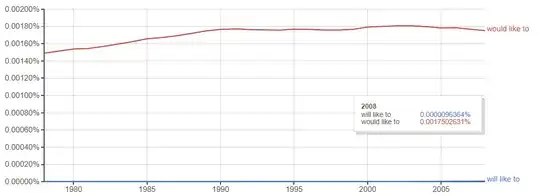
Furthermore, there is statistical evidence from ngrams that in general you rarely would say "will like to". There is a 222 to 1 ratio likelihood for "would like to" against" will like to" in English books indexed by Google ngrams. google ngrams
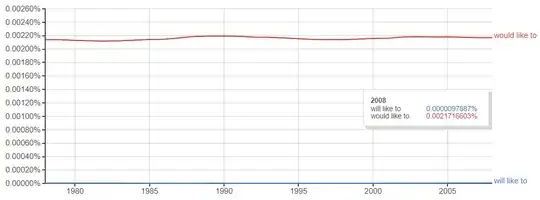
Interestingly enough there is a difference between the American and British frequency ratio. American has a 218 to 1 ratio while British shows 182 to 1 ratio.

American English: american english
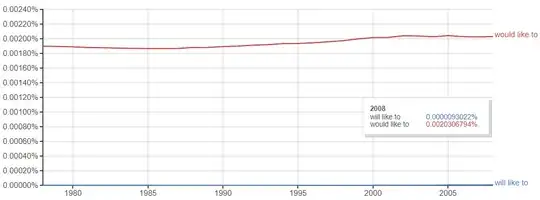
British English: british english ngrams

Even more interesting the usage of "will like to" has increased by more than 130% between 2001 and 2008 in British books while the frequency of "would like to" slightly decreased. british english will like to
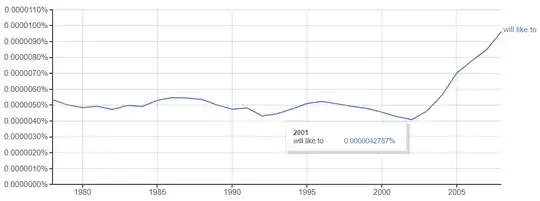
In that same period the usage of "will like to" has increased by more than 140% in American books while the frequency of "would like to" kept relatively stable. american english will like to
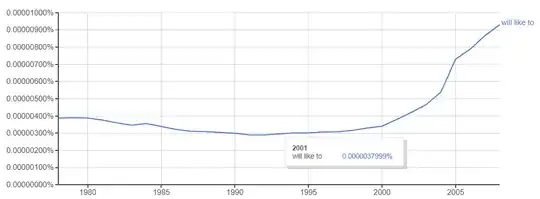
Maybe your friend is on to something. Maybe one day...

Boondoggle
  • 1,174
1

You're correct. One of the dictionary meanings of would is:

  1. Expressing a desire or inclination.
    I would love to work in America
    would you like some water?

The desire is happening now, so we use the present tense of the verb, even though it refers to an activity that may take place in the future.

will is used for an action that will actually take place in the future, rather than just a desire to do so. E.g.

I will make love to her tonight.

or

I will love doing that.

The latter expresses the idea that when you're performing the activity in the future you'll enjoy it, but says nothing explicitly about your current opinion (although we can probably infer things).

Barmar
  • 20,741
  • 1
  • 38
  • 59