53

I asked about the meaning and usage of meta a few days ago, quoting Maureen Dowd’s review of the movie, “J. Edgar” in New York Times.

I received six answers. But I still don’t get a clear idea of what “It’s meta” means because I don't understand (or have a total inability to comprehend) the concept of “self-referential.”

An answerer answered: “Meta in this fairly recent, casual context is supposed to mean self-referential, or recursive in some way. This is the sense in which my teenagers would use this term.”

So let me resubmit the question on “meta” in simpler format. When your teenager boy says “It’s (or this is) meta,” what does it mean? In what situation and of what sort of object they use this phrase?

I’m sorry for many users who lent me kind answers to my previous question. But I would like to get it fully on the meaning and usage of “it’s meta,” as a colloquial expression, not the meaning of meta as a prefix.

Heartspring
  • 8,600
  • 6
  • 43
  • 73
Yoichi Oishi
  • 70,211
  • 1
  • 53
    Off topic - move to meta ? ;-) – mgb Nov 16 '11 at 20:57
  • 19
    Note: a teenager is between the ages of thirteen and nineteen years old, inclusive. – Hugo Nov 16 '11 at 21:13
  • 10
    It's a new and not yet widespread slang usage. So OP shouldn't get too hung up on the exact definition, since it's not fully crystalised. The "self-referential" meaning presumably arose from the metadata beloved of techies, but this is also a typical usage, where it simply means "ironic". – FumbleFingers Nov 16 '11 at 21:16
  • Definitely a dupe, as @BarrieEngland says – Rory Alsop Nov 16 '11 at 21:17
  • @Barrier England. As I put it at the beginning of this question, this derives from my previous question – “It’s sorta meta.” But I was unable to get the clear idea from the answers though I thank for all thier sincere and eraborate input. So I tried to fully understand what “it’s meta” means in casual conversation such as spoken among teenagers, separating it from the analysis of Maureen Dowd’s usage. To speak honestly, I (as non-native English speaker) don’t still get it at all what Dowd’s meant by that phrase, even it was necessary phrase in her statement. When get old, you tend stick to. – Yoichi Oishi Nov 16 '11 at 21:22
  • 2
    Not a dupe, and not really suitable for just editing into the previous question. On the other question, you have discussion of whether the whole JEH thing is meta or not, is Dowd using it right, what does "sorta" mean, and so on. There are some answers that just define "meta" but others that don't and if you don't "get" the word "meta" yet, you can't tell which of those answers is which. – Kate Gregory Nov 16 '11 at 21:35
  • @YoichiOishi: Sorry, I realized that afterwards, but can't find a way to change my vote. – Barrie England Nov 16 '11 at 22:32
  • 6
    See this question for a fuller explanation complete with demonstration. – psr Nov 16 '11 at 23:03
  • 1
    I see what you did there. – AShelly Nov 16 '11 at 23:36
  • @MartinBeckett Come on, there's no off-topic question here but only meta question, according to Kate's answer below :) – Terry Li Nov 17 '11 at 01:55
  • I've always thought about meta as data about data. Sounds weird at first, but it is what it is. For example in games you have the meta game. This is like the play style and you play it this way because of the technical aspects of it (the meta) or the data about the game. This could be also something like data about actual data coming in (is it corrupt?). One of those things that's hard to explain like ironic. – Matt Nov 17 '11 at 08:41
  • @BarrieEngland - don't worry, the system will make it go away after a while. Users can't un-vote to close. – Matt E. Эллен Nov 17 '11 at 12:47
  • 11
    If he says "It's Mehta", it may mean he's into classical music. – JeffSahol Nov 17 '11 at 14:25
  • 1
    Ten years old is considered teenager now? – Robert S. Nov 17 '11 at 20:16
  • 2
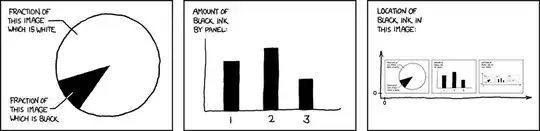
    The obligatory XKCD: http://xkcd.com/917/ (which, to be fair, does actually demonstrate the meaning of "meta") – David Z Nov 17 '11 at 22:34
  • 1
    @FumbleFingers: "meta" isn't from "metadata". I first picked it up from reading Gödel, Escher, Bach: An Eternal Golden Braid by Douglas Hofstadter in 1990, but it was published back in 1979. I didn't pick up "metadata" until fix or six years ago. I expect the IT uses of the "meta-" prefix were also partly inspired by Hofstadter. His book has a kind of cult status among IT types. – hippietrail Nov 18 '11 at 14:17
  • @hippietrail: At about the same time Hofstadter sporadically wrote essays for Scientific American etc. I didn't often read that, and don't personally remember seeing them, but they were published together later as Metamagical Themas which I bought extra copies of to give away as presents. But great man though he is, I can't say he introduced me to the possibility of using meta as a "productive" prefix. We used it like that in Lit Crit seminars at least a decade before. – FumbleFingers Nov 18 '11 at 14:40
  • ...I mean, "meta" as "beyond". The "self-referential" meaning wasn't central to everything about the way Hofstadter used it. – FumbleFingers Nov 18 '11 at 14:43
  • @FumbleFingers: It turns out there is a Wikipedia page on "meta" which has a section on note just Hofstadter as a popularizer but also Quine. – hippietrail Nov 18 '11 at 15:07
  • As I write, Quine is unfamiliar to me - possibly because I'm more into pop science than pop philosophy. But thanks for the link, which I will digest more fully in the fullness of time. – FumbleFingers Nov 18 '11 at 16:27
  • I searched the web to discover what “it's so meta” means, but found this question asking what “it's so meta” means. That is so meta. – ctrl-alt-delor Oct 04 '16 at 18:05
  • I'm truly shocked that my answer below has only 4 likes. I'm willing to bet a LOT of money that your average pre-teen child or teenager is using the word "meta" exactly as I describe to you. It has nothing to do with all the "self-referential" deep stuff that are getting all the likes. It's just unfortunate that teenagers and gamers don't really check this website much, otherwise the correct answer would've become obvious in mere days! =) – Rok Aug 30 '17 at 23:00
  • I don't think anyone does better than this BBC article: https://www.bbc.com/future/article/20211112-facebook-and-the-true-meaning-of-meta#:~:text=Relatedly%2C%20in%20colloquial%20English%2C%20meta,%2C%20%22that's%20so%20meta%22. – Lambie Apr 30 '23 at 15:19
  • One thing that is missed is that the "thing" being meta does so somewhat tongue-in-cheek (in a rye manner) or as an attempt to appear to be more than it is (a cheep way to show off). This is not always the case but when it is used in common parlance it can often be parroted as the term du jour that all the hipsters are using "these days." No wonder nailing down what your teenager might mean when saying that is somewhat nebulous. OTOH, a truly self-referential work is going for the whole hall of mirror effect and sometimes that is just what you want. – Cyberis Feb 16 '24 at 22:34

8 Answers8

108

Something is meta (and self referential) if it is about itself. (Strictly speaking, you can be meta by being about the thing's own category, rather than this specific individual thing, but the key is "about".) If you substitute the word "about" where you see meta in a sentence longer than "it's meta", you will get close to the meaning, even though the sentence you make won't necessarily be grammatically correct. Some examples of meta things:

  • in a meeting, time spent discussing the meeting itself - how long it will last, who will talk first, whether everyone can see the screen - is meta. It's about the meeting, rather than being about the topic the meeting is supposed to be about.
  • when a married couple is arguing about a decision (where to spend Christmas, let's say) and one of them says "you always interrupt me" or "don't yell" the argument has turned meta. They're arguing about arguing now, not about Christmas plans.
  • when a character in a TV show says to another character "this isn't a movie, this is real life" it's a little meta too, because of course it isn't real life, and by saying this, talking about their situation, they've brought up their own fictionality to you.
  • there are also books about writing a book, plays about being in a play, movies about making movies, and so on. Meta doesn't just apply to a conversation, a meeting, or an argument. In fact, the name of https://english.meta.stackexchange.com/ should make sense now - it's for questions and answers about questions and answers :-)

In my experience, Kids These Days call things meta if they are truly meta (arguing about the argument), or off topic, or just not what they wanted to talk about. Some of them love the self-referential thrill of meta (my youngest once used the new label maker we bought to make a label that said label maker and stuck it onto the label maker with delight), but most don't and think it's something to be avoided. Your kids may vary.

Kate Gregory
  • 9,671
  • 36
    YKMV = your kids may vary :) – Hugo Nov 16 '11 at 21:17
  • 8
    That response was meta meta – ChrisM Nov 16 '11 at 22:54
  • 24
    @ChrisM. Incidentally, in Japanese, meta meta (めためた) phonetically means "get confused," or "in chaos"! I never mean the response was meta meta though. – Yoichi Oishi Nov 16 '11 at 23:39
  • 1
    +1 Thoughtful question and intuitive yet insightful answer! – Terry Li Nov 17 '11 at 01:58
  • When the op says "self-referential" they're referring to recent colloquial use of the word "meta", seemingly synonymous with "ironic". Only for that reason you may want to reword your opening sentence as you're using it to refer to something different: the word's generally accepted meaning. Might be clearer as "if it references its own category"? :) – Christopher Galpin Nov 17 '11 at 02:14
  • 1
    @ChristopherGalpin that's a really subtle distinction. Is the argument about this particular argument or about the way they always argue? Either way, I feel it can be called self-referential and can be called meta. – Kate Gregory Nov 17 '11 at 02:38
  • It is a subtle distinction, but I thought it might be important specifically for the op's understanding as they chose it to mean something specific and different. (I fully agree it can be called both.) I was just confused myself as I thought it was an opening to a description of the op's colloquial use. But I am easily confused. :) Carry on. – Christopher Galpin Nov 17 '11 at 02:57
  • @Yoichi Very interesting! Your comment was meta meta meta as it referred to my comment about the article referring to the act of referring to self. – ChrisM Nov 17 '11 at 14:59
  • 3
    I suppose all comments here are responses about responses, and are in that sense, meta. – Nathan Long Nov 17 '11 at 16:26
  • @NathanLong What happens if your comment is both meta, meta meta, and meta meta meta? What would you call it? – Mateen Ulhaq Dec 06 '11 at 03:15
  • I remember there was a movie (which I only watched a few minutes of) in which there's this sidekick kid of Arnold Schwarzenegger, and he keeps trying to prove that they are both inside of a movie. – Mateen Ulhaq Dec 06 '11 at 04:05
  • @muntoo: The film is Last Action Hero (and the kid is right). – ShreevatsaR Dec 27 '11 at 07:14
  • 17
    I disagree with the first sentence (as I've done before). "Meta" means "higher level" (or roughly "discussion in form X talking about the form X itself"), not "self-referential". Your examples actually illustrate this. Arguing about arguments, fictional characters talking about fictional characters, and books about books are examples of "meta", but not necessarily of self-reference. A book is self-referential only if it talks specifically about itself. A metatheorem is a theorem about theorems; a self-referential theorem talks about itself. – ShreevatsaR Dec 27 '11 at 07:24
  • 2
    That's the first thing I did with my labelmaker. =\ – cornbread ninja 麵包忍者 Mar 27 '12 at 02:08
  • @Kate What about the usage of meta as a prefix? For example, what is the relation between physics and metaphysics? – Pacerier May 10 '12 at 13:07
  • 1
    The relationship is that metaphysics is in the book that comes after physics. http://en.wikipedia.org/wiki/Metaphysics_(Aristotle)#Title.2C_date.2C_and_the_arrangement_of_the_treatises – MetaEd Jun 14 '12 at 23:15
  • 1
    "used the new label maker we bought to make a label that said label maker and stuck it onto the label maker" is hilarious wording! – nxx Jan 07 '14 at 17:08
  • @ShreevatsaR it is the concept that is self referential, not the item. So a comic book character arguing about comic book characters arguments (even if different comic book characters, and different arguments) is very meta. (×2 meta) – ctrl-alt-delor Oct 04 '16 at 18:10
  • @richard What do you mean when you say "it is the concept that is self referential"? What exactly is the "self" that is referring to itself? Does the concept refer to itself (if so which concept)? If we consider metatheorems (theorems about theorems) or metalanguages (languages for describing languages), can you point out what, exactly, is referring to itself in that case? Else you're using "self-referential" in a sufficiently vague way that it would be more helpful to replace the term with whatever meaning you actually mean. – ShreevatsaR Oct 11 '16 at 20:48
  • @ShreevatsaR A meta-language is a language that is used to describe a language. (The idea of a language: a new language (or sub-language) is used to describe language(s) ). We are not saying that meta-language number 331, is used to describe meta-language 331 (there is no identity implied by this use of the word self). So meta-language number 331 may be used to describe French, a completely different language. (self-referential is not a good way to describe meta, but this is what was meant by self-referential in this case). – ctrl-alt-delor Oct 13 '16 at 17:08
  • 1
    @richard Excellent, that is exactly my point. You're explaining what "meta" means, and I agree. And as you yourself point out, there is no self-reference in this case. There is nothing that refers to itself here, so the word "self-referential" was being used wrongly. – ShreevatsaR Oct 13 '16 at 17:22
  • @ShreevatsaR yes I think you are correct. I was trying to explain what we meant by self-referential, but you were, correctly, telling us that it is the wrong word. – ctrl-alt-delor Oct 19 '16 at 16:40
  • Another usage of meta is currently amongst kids who play first person video games. The meta then refers to the best of the weapons you could load out with. Typically weapon balance in those games is tweaked again and again by developers trying to make the game fair but players eventually figure out which weapons are "OP" (over powered), when you play with those weapons you are considered to be playing the meta. So, it would be the best weapons in each category you can carry i.e. primary, special, heavy. – jmichas Dec 09 '16 at 18:33
  • With all due respect to the sophisticated answer, I strongly believe that a 10-years-old has absolutely no idea what any of that is, in the answer. A 10-year-old, and even teenagers nowadays, most commonly use the word “meta” to describe something that's...“uber”, perhaps an outdated synonym. Meta, for kids and teenagers, is an acronym for “Most Effective Tactic Available”, and the term started in games and the gaming scene to refer to the best things, tactics, skills, or characters to use to win the game. – Rok Jan 18 '17 at 11:05
  • "there are also books about writing a book..." And there is also a website about a website – Code-Guru Apr 25 '19 at 02:21
  • Another place where 'meta' shows up, is in 'meta data'. You'll find this on your jpeg and other files. It's 'data about the data' - in this case, a photograph or image. The meta data describes information about the image - such as the date it was taken, the settings used, it's title and so on. – Jelila Dec 21 '22 at 23:19
43

The current colloquial use of meta is a bit hard to pin down with a definition — it doesn’t entirely fit the concept of self-reference. It’s probably better illustrated by a couple of examples. There are lots of old jokes that begin:

An Englishman, an Irishman and a Scotsman walk into a bar…

and go on to tell some story where the three people each do something (order a sandwich, perhaps) and behave in stereotyped ways (the Englishman snobbish, the Scot stingy, the Irishman stupid). These are simple jokes: jokes about certain national stereotypes.

But there’s also the joke:

An Englishman, an Irishman and a Scotsman walk into a bar. The barman says “Is this some kind of joke?”

This joke is meta. The humour comes from the barman recognising that he’s in a situation typical of jokes. It isn’t a joke about national stereotypes; it’s a joke about jokes.

Similarly, english.stackexchange.com is a Q&A site for discussing English; meta.english.stackexchange.com is a Q&A site for discussing a Q&A site for discussing English.

(I can’t speak for 10-year-olds; I’m a bit out of touch with current playground slang. But this is how it’s used in current internet slang, and the way a 10-year-old is using it will probably be reasonably closely derived from that.)

PLL
  • 20,575
  • 3
  • 50
  • 103
  • 4
    "An Englishman, an Irishman and a Scotsman walk into a bar..." - like -THAT- would never happen ... lol – Will Nov 16 '11 at 22:39
  • 6
    Three people of different nationalities walk into a bar. Two of them say something smart, and the third one makes a mockery of his fellow countrymen by acting stupid. – starsplusplus May 09 '14 at 10:19
  • 1
    A European and two other people that wish they were still Europeans walk into a bar. One of them says Clinton or Trump. What a joke. – ctrl-alt-delor Oct 04 '16 at 18:14
17

Meta as a prefix can be thought of as one level of abstraction higher: metadata is data about the main data.

If we're talking about digital photos, the data is the photograph itself, and metadata is extra information about the picture data, such as the time the photo was taken, whether the flash was used, orientation, camera make and model, GPS location, etc.

Now, the slang non-prefix word isn't so different. Urban Dictionary is full of slang (and be warned, a lot of swearwords) that's been defined by "the kids", and voted on a bit like here. Their top definition for meta is:

A term, especially in art, used to characterize something that is characteristically self-referential.
"So I just saw this film about these people making a movie, and the movie they were making was about the film industry..."
"Dude, that's so meta. Stop before my brain explodes."

So this is similarly one level of abstraction up, something about something else.

Hugo
  • 67,535
6

With all due respect to the previously accepted sophisticated answer, which is correct as far as the original English language is concerned but incorrect as the answer to this specific question, I strongly believe that the average 10-years-old has absolutely no idea what any of that is, in the answer, and is using the word in an evolved manner that has nothing to do with the original English language.

A 10-year-old, and even teenagers nowadays, most commonly use the word “meta” to describe something that's awesome or ... “uber”, which is perhaps an outdated synonym, or even “OP”, which is short for overpowered. OP, and even the word “broken”, originally referred to game skills/spells, game characters/heroes, which the gaming community believed to be incorrectly programmed (“broken”) in a way that made them overpowered, or so good that they imbalanced the game. However, as games started to become more and more actually balanced, and the gaming community also realized that they are as balanced as possible, the terms OP and broken weren't that accepted anymore. A new term had to be invented. Meta is that word.

Meta, for kids and teenagers, and even for adults involved in the gaming scene (video and computer games), is an acronym for “Most Effective Tactic Available”, and the term started in games and the gaming scene to refer to the best things, tactics, skills, or characters to use to win the game. However, as it became more and more commonly used, it moved from the gaming community to young people generally, and it is sometimes now used instead of “awesome” or “uber”. As desirable as it is to think that our kids and teenagers are using “self-referential” terms, I really believe that this is actually your right answer. Check it with your kid and many other kids. Meta is the new awesome.

In short, when a young person says “meta”, they mean “awesome”. And the term is an acronym for “Most Effective Tactic Available”.

Rok
  • 200
  • This answer strikes me as the most likely interpretation if I were to hear the word from a teenager who likes video games. I disagree with the etymology, though. In the video game context "meta" comes from the term "metagaming", although the backronym you're quoting perfectly reflects what "meta" came to mean in the context of video games. This Reddit thread gives a decent explanation of the concept. – undercat Dec 15 '18 at 03:44
  • I'm also not quite certain that "meta" always implies "awesome". I've seen plenty of people express disappointment at the current "game meta" because the most efficient way to get an edge over your opponents ("the current meta") may not always be perceived as the most fun or original one. – undercat Dec 15 '18 at 03:44
  • Even if the teenager saying it isn't a gamer, they could've heard it enough from their peers, most of whom are likely gamers in today's world and age, until it just started to sound natural as a synonym for awesome or best current thing. – Rok Dec 15 '18 at 04:57
  • Regarding metagaming, I can say that I've been gaming since roughly 1990, and I've never, ever heard of "metagaming" before you linked it now. I understand the concept, and a good example of it is the World of Warcraft Iron Man challenge, but as I said, I never heard of the term before. More importantly, "metagaming" and "meta" within a gaming context are not the same word and do not have any relationship with each other. The former is a portmanteau to define a new phenomenon or concept in the gaming scene, and the latter is a (b)acronym to define the most effective way of playing. – Rok Dec 15 '18 at 05:07
  • Accordingly, the etymologies of both words, metagaming and meta, cannot be interdependent or similar. Meta, if it's a backronym, could've been inspired by metagaming, but that doesn't mean that meta's etymology would be traced to metagaming etymology; the words really have absolutely nothing to do with each other beyond the phonetics and the commonality of the subject of gaming. – Rok Dec 15 '18 at 05:12
  • As for the meaning of the word, people can have their own opinions and subjective feelings about anything in life, from meta heroes and tactics in games to the most fuel-efficient car of year X, this won't change the fact that pro-gamers or simulations have proven that this is the meta, this is the most effective tactic available, regardless of how I or you feel about it, or change the fact that this is the most fuel-efficient car of year X. In other words, you can say that you still don't like the car or don't find this hero fun, but it'll remain the strongest hero & best car nevertheless. – Rok Dec 15 '18 at 05:16
  • Accordingly, if you can never change the "best' or "most effective" status, only change how you feel about it, it would be strange to use the word meta, especially in a non-gaming context, for any meaning other than "best" or "awesome". In other words, if a gamer didn't think something is good or awesome, they have zero reasons to use that word to describe it. Consequently, the word just does not have any other meaning. If you don't find it awesome, then you wouldn't call it meta. You can say, "Even the meta is boring", but you wouldn't say, "This is meta" to indicate something's bad. – Rok Dec 15 '18 at 05:19
6

"This is the reference implementation of the self-referential joke."

Title text: ""This is the reference implementation of the self-referential joke.""


Meta

The source of this answer contains three links to http://xkcd.com/917/: this one, the one before, and the one before the one before the latter one mentioned in this sentence.


</meta>

Another picture worth a thousand words:

The contents of any one panel are dependent on the contents of every panel including itself. The graph of panel dependencies is complete and bidirectional, and each node has a loop. The mouseover text has two hundred and forty-two characters.

Title text: "The contents of any one panel are dependent on the contents of every panel including itself. The graph of panel dependencies is complete and bidirectional, and each node has a loop. The mouseover text has two hundred and forty-two characters."


Basically, for something to be 'meta' in [common] usage, it must satisfy at least one of the following conditions:

  • It is self referential.
  • It is recursive.
  • It is about something.
Mateen Ulhaq
  • 1,521
  • 3
    "community": folks, none of the above things are likely to have been on the 10yo's mind when he innocently uttered 'meta'. – Kris Dec 06 '11 at 06:15
4

Meta is, as best as I can describe it, data about data.

So if the data you are concerned with is say, the name of a person, any additional data related to that data is meta-data.

Main Data: Person's name.
Meta Data: Origin of name.
Meta Data: Name meaning.
Meta Data: Derivations of name.

In more colloquial use, as your son uses it, it somewhat loses its definition. Basically you are referencing a subject with the same subject.

A book about a book would be said to be meta.

Playing a racing game on a smartphone while you're in a car would be said to be meta.

Hugo
  • 67,535
kylex
  • 431
  • Playing a racing game on your smartphone while in a car race might be meta, though even that's a stretch. As a passenger in a regular car on a regular road, it's just normal behavior for a teenager, nothing meta about it. – Marthaª Nov 17 '11 at 00:03
  • I don't know how this answers the question as it pertains to teenagers very well. If your kid plays Magic: The Gathering (replace with Pokemon, Yu-gi-oh, whatever game your kids play), their success in a round depends on how they know the game. If they're good, they might decide to go to a tournament. Once there, if the teenager figures out what strategies are prevalent and changes their deck to accomodate to the most popular kinds of opponents they will be facing, they're playing the meta-game. The term meta is popular in this context. – Joshua Shane Liberman Nov 17 '11 at 15:12
2

As already stated, meta is "something that references something of the same type", e.g. metaliterature is literature about literature, metadiscussion is a discussion about a discussion.

In terms of teenagers, it is often an equivalent for "abstract". By defining it as "meta", teenagers want to express that you should come to the point and don't circle around what you really want to say. I.e. you should be concrete.

For example:

  • Person: "He just lost a vuluable asset with regard to his travelling efforts".
  • Teenager: "Wow wow, too meta dude!"
  • Person: "I mean: His bike got stolen!"
  • could you give an example that demonstrates this use to mean abstract? – Matt E. Эллен Nov 17 '11 at 12:50
  • 1
    I don't know if I agree with the second statement. Abstract means simplify, similar to how abstract art is composed of simple shapes and colors. I don't see why teenagers would associate those two words any more than other demographics. – Joshua Shane Liberman Nov 17 '11 at 15:02
  • 2
    Abstract is not to 'simplify', but refers to 'any object' satisfying certain properties without referring to concrete existence of those objects. Often, meta is abstract. Teenagers might not understand the full meaning of 'meta' and instead think it simply refers to abstract? – Willem Mulder Nov 17 '11 at 15:38
  • 2
    @Willem Mulder. Your "stolen bike" conversation seemed to me one of the clearest examples of ten-year boys's "It's meta" reference that I could get the idea of the phrase. – Yoichi Oishi Nov 21 '11 at 09:20
  • Continuing in the vein @JoshuaShaneLiberman started, I don't think it's correct to call the incorrect usage mentioned above a teenager's "definition". There are probably many people that use "meta" incorrectly and inconsistently. – Chan-Ho Suh Aug 31 '12 at 17:33
1

My strongest guess is that the little one means the kind of state OP is now in. OP, your predicament is meta, by that logic of slang.

What meta means is meta to the OP.

Kris
  • 37,386