How does one properly use i.e. in a sentence? I'm not referring to Internet Explorer.
Asked
Active
Viewed 1.1e+01k times
21

-
4There are some good answers below, but you also might want to consider not using it and writing "that is" instead. It's just confusing otherwise. – Peter Eisentraut Aug 12 '10 at 21:19
-
9Ah I thought IE as in Internet Explorer – Midhat Aug 13 '10 at 03:46
-
6@Midhat ha! Based on what I learned below, you could say that as "Ah I thought IE i.e. Internet Explorer" :-) – 7wp Aug 13 '10 at 05:34
-
4Consider changing the title to say "id est" or "i.e." It'll minimize the confusion a bit. – Jagd Aug 13 '10 at 05:58
-
7"My browser, IE, has crashed 25 times today." – JohnFx Aug 13 '10 at 06:42
-
1My browser is IE, i.e. I don't know of Firefox. – b.roth Aug 23 '10 at 15:48
-
2"My browser, i.e. IE, has crashed 25 times today." =). – Claudiu Nov 11 '10 at 15:44
-
You wouldn’t; you’d just say ‘that is’ or ‘meaning’ or some such. Stupid Latin abbreviations like that are silly in English. You get people pronouncing initialisms that way. Just use English. – tchrist Jan 12 '12 at 16:23
4 Answers
28
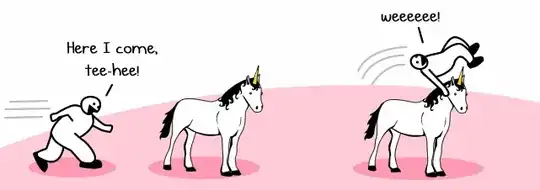
via http://theoatmeal.com/comics/ie
Ever done this?
"When eating a squirrel taco, Bigfoot always adds extra condiments, i.e., ranch dressing"
This is wrong!
I.e. is an abbreviation of a latin phrase meaning "that is." It's not used for listing examples; it's used for clarifying a statement. Think of it as "in essence" or "in other words." By using it above we're declaring that ranch dressing is the only condiment in existence, which is false.
In the previous example, we should have used e.g., which means "for example."
For example:
"The best way to take out a unicorn is with a Claymore, i.e., a directional mine which explodes shrapnel into a designated kill zone."
Another example:
"Eating a squirrel taco without any ranch dressing is like playing leapfrog with a unicorn, i.e. a very bad idea."

Jeff Atwood
- 204

7wp
- 795
-
2
-
Hah. Nice comic there... though it does sort of ruin the readability of the page. – Noldorin Aug 12 '10 at 21:16
-
-
2
-
1You may want to add that "i.e." stands for "id est", which means "that is". – Vincent McNabb Aug 13 '10 at 04:11
-
so 'i.e.' can't be used instead of 'in other words'? as i agree that for examples we have 'e.g.' for examples and 'viz.' for a complete list of examples i.e. there is nothing that can be added to it – Dan D. Feb 15 '11 at 21:11
-
"i.e., ranch dressing" is a perfectly appropriate turn of phrase. It means something very specific, though. It's like you're making fun of bigfoot because he always puts ranch dressing and no other condiments on all his food. – Brad Apr 16 '11 at 05:50
-
@Brad well yea, if you're purposely trying to be sarcastic, it might work :) – 7wp Apr 18 '11 at 20:50
15
I assume you are referring to the common abbreviation for the Latin id est, which is commonly translated as "that is to say". So, think of the English when you would use it, i.e. when you're about to write i.e. think to yourself "that is to say".
See how I did that? As to the stylistic issue, I would always do it as I did above: lower case, periods in place. A common variant is ie. instead of i.e..
Contrast with e.g. which is from the Latin exempli gratia meaning "for example." One can construct sentences where either one is acceptable, but usually just contemplating the English meaning of each and picking the best fit is the way to go.
If you're referring to Internet Explorer, just say Internet Explorer.

jeffamaphone
- 1,212
4
i.e. is an abbreviation for the Latin "id est", meaning "that is" (or more loosely, "in other words"). Its English usage follows precisely as such. The abbreviation is simply used to signal that the following phrase is another way of expressing the preceding phrase.
(Note: i.e. is often misused to indicate an example; this is incorrect. Always use e.g. in that case.)

Noldorin
- 13,260
4
If you're referring to Internet Explorer, depending on the context you may have to indicate that it stands for that.
If you're referring to id est, i.e. "i.e.", The Oatmeal has just published a comic on that.
In all seriousness though, you use it to mean 'that is' or 'in other words' or 'in essence'. When you're explaining something, you use i.e. or its synonymous English phrases when you are about to express the explanation in different terms, as a means of clarity for instance.

BoltClock
- 1,111