2

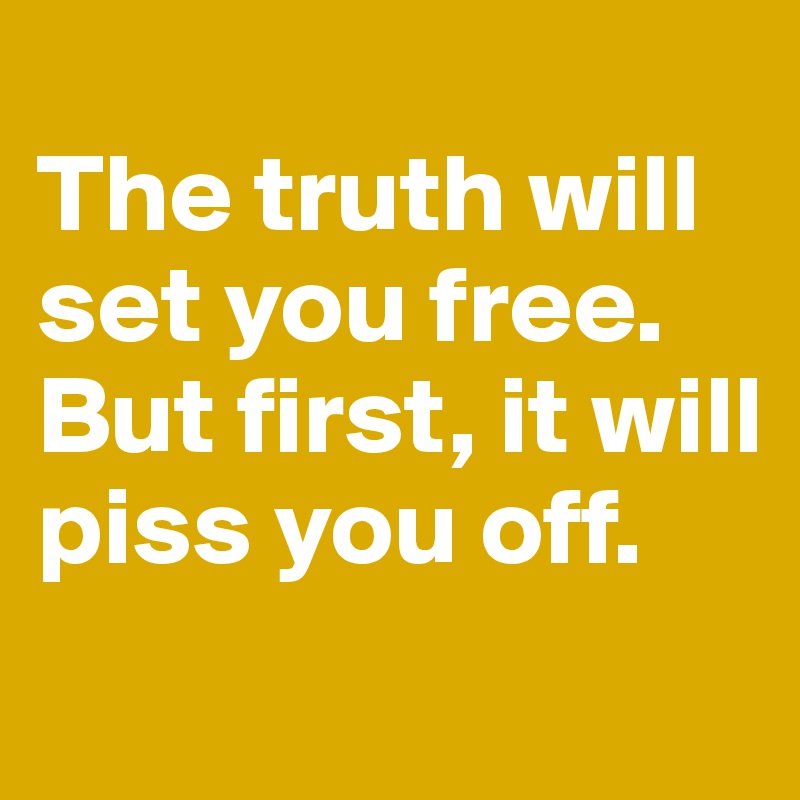
There is the quote, "The truth will set you free".

And then there are the quotes, "The truth will set you free, but first it will piss you off." and "When you believe a lie for too long, the truth doesn't set you free. It tears you apart.".

I'm not concerned about who said the quotes or why. My question is focused on whether a single word phrase exists that you could call each of the derived quotes, which are based on another quote (particularly, the first one, in this example). So something with meaning similar to "modified quote", "derived quote", "adjusted quote", "inspired quote", or "allusion quote", but as a single word if possible. Does such a word exist?

Hunter
  • 31
  • I’m voting to close this question because this should be moved to another stack exchange –  Nov 20 '20 at 03:30
  • Well, I'm tempted to say "metaphor", since I never metaphor I didn't like. But that's probably not the right term. – Hot Licks Nov 20 '20 at 12:11

3 Answers3

2

A few of options spring to mind, depending on what you want to say about the quote.

Something that is quoted incorrectly is a misquote. A misquote can be an error, it can also be deliberate. You could call your example "a misquote for comic effect" which would acknowledge that you recognise the intended humour.

You could also call the quote a bastardisation (AmEng: "bastardization"). To "bastardise" is to "change something in a way that makes it fail to represent the values and qualities that it is intended to represent". Using this word could imply that you look negatively on the misuse of the original.

Another possible option might be to call it an adaptation. That would normally be used to describe an adapted work longer than a quote, but notice this line from an online article:

To adapt a quote from the famous 1967 Cat Stevens song The First Cut is The Deepest: In business, the first customer is the hardest.

Astralbee
  • 2,680
  • Adaptation is a good idea, that works for my writing purposes (I posted this to the Writing StackExchange). Thank you! – Hunter Nov 21 '20 at 22:21
0

You may regard your examples as either a paraphrase:

A restatement of a text, passage, or work, expressing the meaning of the original in another form, generally for the sake of its clearer and fuller exposition; a setting forth the signification of a text in other and ampler terms; a free translation or rendering;

...or an allusion:

passing reference or indirect mention

RobJarvis
  • 1,691
-1

What is it called when you change a well known quote to suit your subject?

Quoted from SE English Lang and Usage post:

The word I've heard used for this on the linguistics blog Language Log is snowclone (it's derived from phrases of the format "If Eskimos have N words for snow, X surely have Y words for Z.")

Here's a Language Log post that describes the moment the word was coined and that links to some examples: Snowclones: Lexicographical Dating to the Second

And here's how it's defined by Collins Dictionaries online:

a verbal formula that is adapted for reuse by changing only a few words so that the allusion to the original phrase remains clear

(bolds mine)

tblue
  • 1,901