Are mistrust and distrust synonyms?
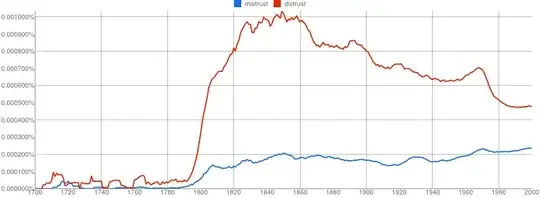
And if so, how have two such similar words coexist for so long? Google N-grams suggests the two words have coexisted since the 1700's.
Are mistrust and distrust synonyms?
And if so, how have two such similar words coexist for so long? Google N-grams suggests the two words have coexisted since the 1700's.
The Grammarist has a discussion on these words:
Distrust and mistrust are roughly the same. Both mean (1) lack of trust or (2) to regard without trust. But distrust is often based on experience or reliable information, while mistrust is often a general sense of unease toward someone or something. For example, you might distrust the advice of someone who has given you bad tips in the past, and you might mistrust advice from a stranger.
[...]
[However,] mistrust is most often used as simply a variant of distrust.
That sums up my thoughts pretty well. I like the distinction, but often people don't recognize it.
Consider disuse and misuse. By extension, distrust should mean an absence of trust (cf disinterest) while mistrust should mean active suspicion.

I think distrust has evolved to become the active-voice form of mistrust.
Consider the following sentences:
I distrust our gardener. -vs- I mistrust our gardener.
--the first form sounds more correct.
Hate and mistrust are the children of blindness. -vs- Hate and distrust are the children of blindness. --again, the first form sounds more correct in the current era.

It seems to me that when we compare those words which contain the prefix mis-, and those which contain dis-, the mis- prefix more often denotes a wrongful action, as in a mistake, whereas the dis- prefix seems more to denote the intentional and not incorrect negative such as disagree or disregard. Therefore to distrust would seem to me to be the rational, intentional and calculated decision to not trust, whereas to mistrust seems to me to sound more like trusting that which should not be trusted or to trust mistakenly. I know that is not the meaning but given the way the prefixes are most often used, it would seem to me that the words would make more sense that way.


