1

I have come across an uncanny amount of examples in song analysis where the 9th (or 2nd) is used over a minor triad in an important way. I don't just mean as a passing tone but as a, beginning notes, a climax "money" note and even as an ending note over a minor chord. Here is an example by Coldplay, "Green Eyes", where the song ends on the Bm chord with the C# note as the final note.

Coldplay "Green Eyes" score excerpt

I really like the sound of the note but when I play the chord at the end of the Coldplay song on piano with the vocal melody note it sounds quite dissonant against the min3rd of the B chord (D).

Is there something special about this note or indeed a min9th chord that makes it get used so much?

Aaron
  • 87,951
  • 13
  • 114
  • 294
  • Regarding the dissonance, a minor 9th chord can potentially be dissonant if the 9 and 3 are adjacent to each other. That creates a m2 cluster, but some people like that sound (I do) especially within a voicing. The thing to look out for with a m9 chord is in what octave the notes are. If the 3rd is an octave above the 9th you will have a m9 interval between them which is more dissonant than a m2. That’s the case here between the D in the guitar and the C# in the vocal. This is something you’re typically supposed to avoid but they either liked the sound of it or it didn’t bother them. – John Belzaguy Jan 30 '21 at 18:08

2 Answers2

1

Who knows why it's used "so much". How much? How much is it used where? In all genres and cultures? Or just some? Is it used much on American country & western songs? Elbonian polka songs? The note is most probably used in some very speficic genres and cultures where people like and tolerate what it does.

Here are my personal and subjective reasons to use the 9th / 2nd scale note over minor chords:

  • It adds a bit of texture and harmonic thickness without creating tension or pushing towards another chord. You can add it anywhere and it kind of seems to do something without doing anything "functional".
  • It sounds slightly unexpected and jazzy in some contexts, but not too weird to alienate most people. If you add the 9th in a song that's usually not played like that, it makes it sound "different".
  • In a melody or solo it can add melancholic feeling, because it's away from home. Not too close like a flat 9th would be (which not only demands harmonic motion but also adds plain "sensory dissonance"), but somehow close enough that you could stay there just as well as move.
  • When added over a minor chord on the 3rd scale degree (of the major scale, e.g. C#m in your example song), a 9th adds a bit of "outside" or modal alteration feel, but very lightly and temporarily.
  • In a melody or solo you can safely add a 9th over any minor chord, to create the effects mentioned above, so it's good for soloing. It doesn't add anything functional, so it won't disturb or distract the harmonic progression.
  • A minor chord's 9th is the same note as the relative major's maj7, and it seems to bring a bit of the same effect. For example in Am vs C, the B note is Am's 9th, but C's maj7. Let the B ring, it can be a glue note.

I think a lot of the above could also be said about adding a 9th to major chords as well.

And almost the same applies to adding an 11th to minor chords. It sits there nicely, adding texture without doing much. For major chords, it can clash a bit with the third, but for minor chords it doesn't.

Here's a nice chord progression that uses some of the stuff above.
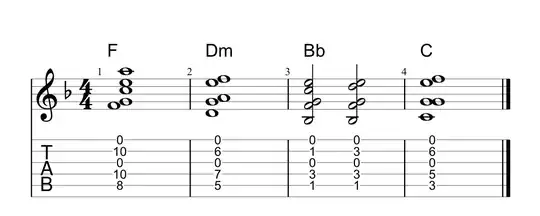
Nice chord progression with open strings F Dm Bb C

Additional notes create texture and melancholic feeling, but it's still just F Dm Bb C. (By the way, the added 11th on the C chord doesn't seem to clash with the third at all. IMO)

piiperi Reinstate Monica
  • 27,967
  • 1
  • 37
  • 91
0

There is a lot of opinion based comment driving this question. I am not sure there is anything "special" about the minor 9th chord in contrast to the Maj 9th, or the 9th. Why do you think there is? If I do a quick search through my library of scores, real books, and other song books I see a fair amount of -9, M9, and 9 all over. In fact I'd say there are more occurrences of the 9 and #9 showing up in classic rock, blues and Jazz than -9 across the genres.

One thing that comes to mind is that the 9th (or 2nd to be more precise) is used to create a suspended resolution in a minor key. In a major key one often encounters the progression V7 --> Isus --> I where Isus refers to a sus4. In a minor key one encounters V7 --> isus(2) --> i. Leaving the 2 in the chord while introducing the -3 creates the -9 chord.

This device is used a lot in classical music and it does seem that the sus chords (both 4th and 2nd) enter the spot light in modern music. I recall seeing an interview with Ruth Underwood where she commented on Frank Zappa using sus2 chords all over the place in his compositions. He just loved that chord. As mentioned by other answers this chord has a lot in common with the relative major 7th chord and many guitarists will replace one with the other. This is more true of the Maj6 and the relative -7 chords as they are identical, not just slightly overlapping. From a composition perspective using such chords allows one to create a sense of key ambiguity and move seamlessly between the minor and relative major keys without a modulation chord sequence (although I prefer to hear such sequences as depicted in Max Reger's text). But really, this is speculation on my part. The only way to make objective sense of this question is to show some statistics that prove that the -9 chord is "common" by some measure and then issue a survey to songwriters to try and understand their reasoning.