In my experience, here's what jazz performance auditions usually consist of:
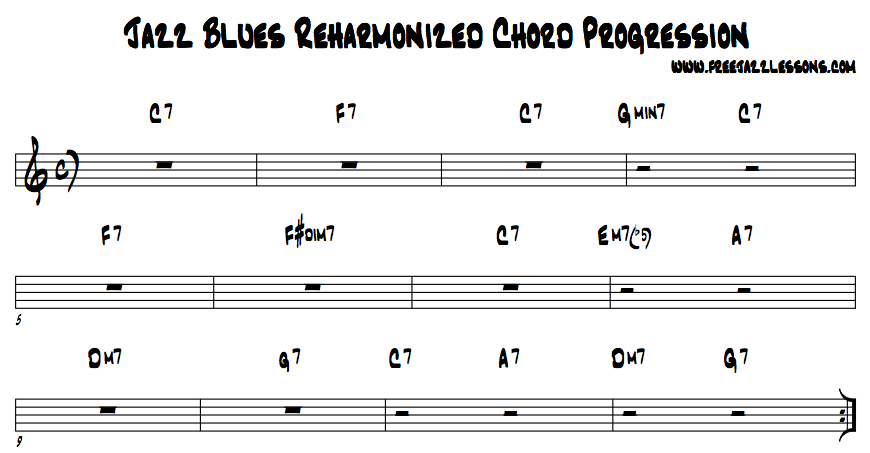
- play a standard 12 bar blues (usually in F, and it would help if you know this form--shown here in the key of C)
- play another song (sometimes of your choosing, sometimes of their choosing)
For jazz bass, "playing" these songs could include any of the following:
- playing the melody
- walking basslines
- improvising a solo
- sight-reading notes and/or rhythms written on the page
They will definitely have you walk basslines, which essentially means you will make up your basslines on the spot as you read through the chord changes. For example, you see the chords | Cm | F7 | BbΔ | EbΔ | and improvise these quarter notes: | C Eb G Gb | F F C B | Bb D G F | Eb D C Bb |. Similarly, if you're asked to improvise a solo, most likely you will only receive chord changes like | Cm | F7 |... For the final item, sight-reading, you might be given some rhythms (like this), or you might be given some music written in bass clef. The idea is that you'll never have seen it, and you'll play it on the spot.
They may also ask you what standards you know, or how many standards you know. A standard is a classic jazz tune that is widely known within the jazz community. "Knowing" the standard means you can play on the spot (typically without any music in front of you).
If the audition has a theory component, then that's another can of worms entirely. To test theoretical understanding, you might be given a quiz, or an unfamiliar song to analyze, etc. A theory component would probably focus on (a) key signatures, (b) modes and scales, (c) chord analysis / Roman numeral analysis, and (d) ear training (e.g., they play a chord or an interval and ask you to identify it, or they play a melody and ask you to sing/play it back).
This isn't as common, but you might also be asked about (or asked to play) some chords on piano. A "chord voicing" refers to the way in which a chord is expressed. For example the chord Dmin could be played as D-F-A, or E-F-A, or E-F-C, or D-G-C, etc. (Some of those voicings are rootless--they don't contain a D.) The teachers might ask you to play a few basic chords on piano, even if that is not your primary instrument. The reason for this is that many jazz programs will require all students to learn some elementary piano, regardless of their primary instrument. The reason for this is that the piano is a great tool when composing and arranging songs, and when learning about harmony. The fact that the notes are all laid out in front of us makes the piano a great, visual teaching tool.