3

Short version

I'm specifically referring to Graham Oppy's paper An Argument for Atheism from Naturalism:

Abstract This paper outlines an argument for atheism from naturalism that I have developed in more detail elsewhere (in particular, in The Best Argument against God). The overall shape of the argument is as follows: first, naturalism is simpler than theism; second, there is no data that naturalism does not explain at least as well as theism; and, third, naturalism entails atheism; so we have good reason to prefer atheism to theism. Note that this statement of the shape of the argument is NOT a statement of the argument itself.

In short, Oppy argues that naturalism is simpler than theism, and that, all else being equal, we should always rationally prefer a simpler explanation of the data.

What are theistic responses to Graham Oppy's argument?

Longer version

A few relevant quotes from the paper:

Theists differ in the ways that they depart from naturalism. Some theists believe in a God who created our universe ex nihilo. Some theists believe in a God whose actions preserve our universe in existence. Some theists believe in a God who inhabits an eternal realm that has no spatiotemporal relation to our universe. Some theists believe in an intelligent and active God who is neither a natural organism nor an artificial intelligence created by natural organisms. Some theists believe in a God that is a non-personal supernatural power or supernatural force that exerts influence on our universe. Some theists believe that the universe possesses the non-natural property of being divine, or that the non-natural property of being divine ‘permeates’ the universe. And so on.

Although theists differ in the ways in which they depart from naturalism, there is a common feature to theistic departures from naturalism. In every case, theists differ from naturalists by believing in something additional: either believing in one or more additional intelligent agents, or believing in one or more additional forces or powers, or believing in one or more additional non-natural properties of the universe.

Suppose that we are comparing a particular version of theism with a particular version of naturalism. Suppose, further, that these versions of theism and naturalism agree in their beliefs about which natural entities, and natural powers, and natural forces, and natural properties, and natural laws there are. In this case, it’s not just that the theist has beliefs in something over and above the things the atheist believes in; it’s also the case that the naturalist does not have beliefs in anything over and above the things the theist believes in. From the standpoint of the naturalist, the theistic beliefs of the theist are pure addition; and, from the standpoint of the theist, the naturalistic beliefs of the naturalist are pure subtraction.

In this case, if all else is no better than equal, then there is clear reason to prefer naturalism to theism. For, if all else is no better than equal, then there is no reason to have the additional theistic beliefs. Hence, in this case, in order to decide between theism and naturalism, we just need to determine whether all else is no better than equal.

...

The burden of the rest of this chapter is to argue that there are no features of the natural universe that have a better explanation on theism than they do on naturalism. Of course, I won’t be able to examine every feature of the natural universe that might be thought to have a better explanation on theism than it does on naturalism. However, I shall try to examine all of the most prominent features of the natural universe that have been widely supposed to have a better explanation on theism than on naturalism. Given the treatment of the cases that I do discuss, it should be obvious how to extend the discussion to features of the natural universe that I do not examine here.

He then goes on to explain how 8 features of the world commonly used to argue for theism can be better accounted for under naturalism. Namely:

  • Existence
  • Causation
  • Fine-Tuning
  • Morality
  • Consciousness
  • Miracles
  • Religious Experiences
  • Meaning and Purpose

9. Conclusion
As I mentioned at the outset, I cannot claim to have considered all of the data that bears on the decision between theism and naturalism (and not can I claim to have given a fully adequate assessment of any of the data that I have considered). However, I hope that I have done enough to indicate how my argument for naturalism would look if it were set out in full and complete detail. (I give a fuller—but still incomplete—exposition of the argument in The Best Argument against God, Palgrave-Macmillan, 2013.)

10. Note about Evil
Of course, there is data that at least some theists suppose favours naturalism over theism—e.g. data about horrendous suffering, data about non-belief, and data about the scale of our universe. Some naturalists think that data about horrendous suffering is logically inconsistent with theism. As Epicurus argued long ago:

Is God willing to prevent evil but not able? Then he is not omnipotent. Is he able but not willing? Then he is malevolent. Is he both able and willing? Then whence cometh evil? Is he neither able nor willing? Then why call him God?

Other naturalists think that data about horrendous suffering renders theism highly improbable: given the major horrors of the twentieth century alone, isn’t it incredible to suppose that our universe is the work of an omnipotent, omniscient and perfectly good being? I have focussed on data that many theists suppose favour theism over naturalism because my argument requires only that, on any piece of data, naturalism does at least as well as theism in explaining that data. Even if it is true, for example, that naturalism affords a better explanation of horrendous suffering in our universe than is given by theism, that truth makes no contribution to the argument that I have been advancing here.


NOTE: Graham Oppy's formulation of the argument is arguably one of the strongest available in the literature, given Oppy's reputation as one of the most respected contemporary atheist philosophers. For instance, William Lane Craig once said about Oppy's book Arguing about Gods:

Oppy's book is not merely recommended but essential reading for anyone interested in natural theology today. No one can pretend to a successful theistic argument unless he has dealt with Oppy's criticisms first. (source)

However, the claim that naturalism is "simpler" than theism is not unique to Oppy, as it is commonly asserted by atheists in general. For instance, take a look at some of the answers to Could Occam's Razor ever favor theism?.

Mark
  • 4,725
  • 1
  • 18
  • 50
  • 4
    People might want to check out the arguments already posted at https://christianity.stackexchange.com/questions/100303/what-are-christian-responses-to-graham-oppys-argument-for-atheism-from-naturali – JonathanZ Mar 03 '24 at 17:47
  • 3
    Why are you looking specifically for theistic responses? Don't you already have those? – TKoL Mar 03 '24 at 17:57
  • @TKoL not exhaustively. Christianity does not represent all forms of theism. – Mark Mar 03 '24 at 18:34
  • 2
    @Mark: Would you be willing to accept a Pastafarian answer? – Corbin Mar 04 '24 at 18:03
  • 1
    @Corbin What would the argument look like? I'm open to seeing examples. – Mark Mar 04 '24 at 18:05

6 Answers6

7

It is true that simplicity can sometimes be subjective but I think Oppy’s point in this case is that it may in fact be undoubtedly simpler.

Let me illustrate this by way of analogy. People might disagree as to whether or not Newton’s theories may be simpler than Einstein’s theories. However, almost no one would think that the idea that there is a world full of humans is more complex than the idea that there is a world full of humans and animals. This is because the latter includes the former.

Similarly, atleast from an ontology perspective, the universe exists in both theism and naturalism. But God and the “supernatural” only exist in one of these perspectives. So unless you can successfully argue that God is necessary to explain the universe, then atleast from a simplicity standpoint, I don’t see how one can argue against Oppy’s point.

To play devil’s advocate, I suppose as a theist, one could argue that ontology is not the only thing that makes a theory more complex. However, when deciding between two theories and you don’t have any independent evidence to pick between the two, then I’m not sure what else you can go by except this.

Baby_philosopher
  • 1
  • 1
  • 4
  • 22
  • 1
    A + B is always more complex than just A, good thing to point out. And until someone builds an actual working model of B (God), it's hard to argue, I think, that B must be necessary to explain the existence of A. – TKoL Mar 03 '24 at 19:02
  • 2
    Yeah, pretty much. That’s why I feel like the other thread where people kept talking about the supposed subjectivity of Occam’s razor were completely missing the point. – Baby_philosopher Mar 03 '24 at 20:40
  • @TKoL i'm not sure that's true - eg if A is the set of numbers 0-100 except 7, and B is 7. it seems to me that A + B may be simpler than A if the addition makes it possible to unify otherwise disparate elements of A into a single pattern – Silver Mar 04 '24 at 16:35
  • 2
    @Silver First, these are abstract objects. Second, you are referring to simplicity here in the sense of describing things, not explaining things. For example, “God did it” is a very short description of a potential explanation. But does this make it more simpler? What does it explain anyways? This is a game of language anyone can play. – Baby_philosopher Mar 04 '24 at 16:50
  • 1
    @Silver I would argue that your A being defined as "the numbers except 7" is not A at all, but A - B. Of course making an arbitrary exception is more complex than not making an arbitrary exception. – TKoL Mar 04 '24 at 17:19
  • @TKoL the analogy seems straightforward - the world may contain two things that can both be explained together with god but need seperate explanations otherwise. i can't think of any offhand, but then i don't believe in a creator god myself – Silver Mar 04 '24 at 17:29
  • @Baby_philosopher i would have said that a (causal) explanation is a description of how something came to be. in which case the simplicity and uselessness of 'god did it' is a good example of simplicity not being a reliable way to decide what to believe – Silver Mar 04 '24 at 17:31
  • 1
    the analogy seems straightforward - the world may contain two things that can both be explained together with god but need seperate explanations otherwise. i can't think of any offhand - if you can't think of what your analogy is analogous to, it doesn't seem that straight forward to me. I fully agree with you that arbitrary exceptions are more complex than non arbitrary exceptions, but an arbitrary exception is an "A+B", not an "A". "The integers, except 7" is the A + B to the A of "The integers". "Except 7" is a "+ B". Kolmogrov complexity. – TKoL Mar 04 '24 at 17:49
  • 1
    if we're looking at it from an information-theoretic perspective, the simplicity of an explanation depends entirely on what kinds explanations you've already arbitrarily decided are simple. kolmogorov complexites are comparable without choosing a specific language only between infinite categories of string, for the specific question of whether explanation x or y is simpler the constant term matters. There are as many encodings where what we call N{7} is A as there are where it's A-B, and in this case whether a world with and without god is A+B and A or A and A-B is (sub)cultural. – Silver Mar 04 '24 at 19:08
  • 2
    I think "there is a world full of humans but no animals" is more complex than "there is a world full of humans and animals". I can explain the latter with a very short theory (evolution) compared to the gymnastics I have to go through to explain the former (where did all the animals that evolution predicts go?). So I don't buy this argument; by analogy, perhaps "the universe contains us but not god" is indeed more complex than "the universe contains us and god". i.e. maybe some short theory entails the existence of both us and god; then more complexity is needed to explain why god is missing. – Daniel Wagner Mar 05 '24 at 00:37
  • 1
    So you’re saying that the simplicity of a theory depends on the English language? @DanielWagner I can construct a new language to describe anything I want with just one letter. “X did it” explains everything just as much as God and is very simple. It’s only one letter! Let me know when you start believing in X. – Baby_philosopher Mar 05 '24 at 01:40
  • 2
    Yes a simplicity of a theory depends on the language used. But "X did it" is exactly the wrong way to think about encoding, i.e. the process of representing something in a string of words. You first fix a language then encode ideas in that language. The point of simplicity is very much to avoid a posteriori reasoning, a.k.a. the Texas sharpshooter fallacy. – Passer By Mar 05 '24 at 09:34
  • 1
    I upvoted the answer but want to comment on the A+B being more complex than A argument. The answer is thus: a) one would have to favor, for example, ontological simplicity vs descriptive simplicity and b) regardless of notion of simplicity A+B can be simpler when A and B are related and one simplifies the description or ontology of the other, thus in these cases A+B can be simpler than A or B alone. – Nikos M. Mar 05 '24 at 12:33
  • 1
    For example, when A is a large file and B is a zip algorithm, A+B can be way simpler than A alone. – Nikos M. Mar 05 '24 at 12:43
  • 2
    This whole argument from simplicity is a giant fallacy. From a naturalistic point of view, the concepts of simplicity and truth are entirely orthogonal. Not to mention that there is no objective measure of simplicity: For example, the problem of the universe's existence/origin becomes vastly more complex (rather, impossible to solve) with a purely naturalistic consideration. Perhaps you may disagree, but that is subjective. – csstudent1418 Mar 05 '24 at 13:25
  • @Baby_philosopher Yes, absolutely, simplicity depends on the language used. In fact, choosing a language more or less corresponds to choosing a prior on how you expect the universe to be before you observe anything about it. English is something of an unfortunate choice in that regard, as its design is deeply entangled with our observations of the universe, but I don't know that it's really possible to avoid that property. (And, indeed, this is why I reject your argument about "'X' is a new word that contains a full argument for theism": your new language is too far from my priors.) – Daniel Wagner Mar 05 '24 at 18:27
  • 2
    @csstudent1418 there is no objective measure of how much evidence we have for a theory either. Yet we use the term all the time. There is quite literally no objective measure for justifying literally any belief. This doesn’t make it a fallacy. Philosophy is about subjective judgments and there’s no escape from it – Baby_philosopher Mar 06 '24 at 10:20
6

I'll only respond to the part of his argument that is at least partly spelled out in the question: the part about naturalism being simpler than theism. He claims that theists believe all of the things that naturalists believe, but that theists also believe something additional as well. However, it is not the case that theists believe everything that naturalists believe. Naturalists need some principle to explain why laws of nature work. Why should a changing electric field cause a magnetic field? Why should there be universal gravitation? Why should light have the speed it does? Naturalists can have no ultimate explanation for any of this. All they can do is point to other laws of nature, but those laws have no explanation until they come up with some other laws of nature to explain those laws of nature. It is an endless regress. Whatever naturalists use to solve this problem, theists don't need that thing.

I'll also add that due to my knowledge of these issues, I feel some extreme skepticism on whether he actually has naturalistic explanations for the things in the list that are better than theistic explanations or that he has any naturalistic explanation at all for existence; however, he at least seems to be a serious scholar worth listening to (as opposed to Dawkins, Dennett, Hitchens, and the like).

David Gudeman
  • 9,892
  • 1
  • 13
  • 46
  • Comments have been moved to chat; please do not continue the discussion here. Before posting a comment below this one, please review the purposes of comments. Comments that do not request clarification or suggest improvements usually belong as an answer, on [meta], or in [chat]. Comments continuing discussion may be removed. – Geoffrey Thomas Mar 06 '24 at 20:04
5

On my more theistically-inclined days (they vary), I don't know that I'm often believing in order to explain the laws of physics, say; or the history of the world; or even what I ought to do. There is something almost disrespectful about the idea, as if I believed that someone exists for the sake of explaining other things when I have a different, personal relationship with them anyway. Setting that impiety aside, though, we should note that we can at least ask questions like, "How did God create the world?" and, as we shall see, look for some kind of answers to those, too. So it is not as though there is nothing to explain about God; believing in God does not put an end to the depths of explanation. For example, that God, even God, would by some ultramiracle be redeemed from some dystheism-theoretic sin is something that would call for an explanation; or differentiating between creation ex nihilo and ex possibilio can be explanatory; or describing how one divine being can exist as multiple persons "in full," and in that fullness assume full humanity unto Itself as well, means explaining some things in terms of other things; and so on and on. When Aquinas has the divine persons as, predication-theoretically, relations instead of properties of God, doesn't this in some way "explain how" the concept of the Trinity is possibly logically possible?

Suppose, then, that one took the higher-order properties or relations of the divine nature as axiomatized and then questioned divine incomprehensibility just as well as divine simplicity has been, or infinity (modulo Scotus) might be, etc. Firstly, however, the concept of divine incomprehensibility will be refined into at least a weak and a strong form:

  • Weak incomprehensibiity. Some, but not most, factoids about the divine nature are beyond our comprehension, even such comprehension as would emerge from our own natures being transformed as perfectly as possible by God.

  • Strong incomprehensibility. Most, if not all, factoids about the divine nature are beyond our comprehension.

That there is such a distinction already in the field can be indicated just by the theory and practice of theodicy. —Now, there is a serious tension between the doctrine of incomprehensibility and that of simplicity. What challenges our intellects are things like having to distinguish substances from accidents or extensions from intensions or so on and on; by contrast, if something was so simple that understanding It would not require those distinctions, then in fact, understanding This would be the simplest thing of all. Our intellect, with its urge towards abstract, absolute unity, with all its talk of ens realissima and the actus purus, would even find the appearance of divine simplicity entirely welcome, as fulfilling its (the intellect's) desire for unified necessity. So the extreme forms of the simplicity doctrine seem possibly inconsistent with an "axiom of (strong) incomprehensibility" (if not a weak one, too).

So on the other hand, if we are navigating between the Scylla of simplicity and the Charybdis of strong incomprehensibility, let us say with hope that our ship lands on the shores of the idea that many of the awe-inspiring works of the divine nature can in some sense be explained. Anselm at his weirdest and the Catechism of the Catholic Church at its most esoteric both make claims that involve an at least partial, metaphysical explanation of the possibility of a concrete doctrine (the Incarnation relative to Anselm, the Resurrection relative to the Catechism). There has also been a slight debate on the philosophers' side of things over the idea that "God ought to exist" + "ought implies can" = "God is possible" = "God is possibly necessary" = "God is necessary" = "God is actual." That dialectic is related to some extent to theories like Rescher's "axiogenesis" thesis, which also involves explaining things like the foundations of the world, in terms of hyperfoundations if necessary.

For there is no need to think that explanations of things "in" God terminate, anymore than we need to think that explanations of things in the world terminate in, say, the initial expansion. We are free to imagine that the question of a time before the initial expansion is not sufficiently grounded; or we are free to find those grounds in the metaphysics of e.g. string theory. Likewise, we can trace our understanding of things on one level of divine representation down to a deeper level, and given that we can't help but understand things coherentistically, then we will be called to keep tracing our understanding downwards regardless of whether we wish to.

Over on the ChristianitySE, one user asked about applying category theory to the doctrine of the Trinity. Let us abstract over this intramural concern and simply(!) ask what might be gleaned about the formulations of other, more abstract questions, by reformulating them in the language of category theory? As if we might take some category Creatrix and ask about initial and terminal objects therein (presumably God would be both initial and terminal, "the first and the last"), or degenerate and trivial cases of creation (creation-by-the-destruction-of-nonexistence and creation-by-default-emanation), etc. How much would this count as "explaining" the divine nature, then, after all?


There is also a way in which theoretical simplicity is possibly second-order self-defeating. This is because the topic of theoretical simplicity is, intuitively, "not simple": the SEP article on the topic does run through six major sections (one of which has three major subsections), for instance, and the subtopics themselves involve things as convoluted as the contrary principle of plenitude. Or so to say: the theory of theoretical simplicity is not theoretically simple ("by its own lights"). —And I do wonder what God would think about people debating Its existence on the basis of separate questions about simpler (or not) explanations of other things.

Kristian Berry
  • 13,937
  • 2
  • 13
  • 40
4

There are two obvious counter-arguments. One is that simpler is not necessarily correct in itself (consider the many well-known examples of simpler theories being supplanted by more complicated ones). The other is that usually, when we are asked to explain why things happen, we never content ourselves with the explanation 'they just did' on the grounds that it is simpler. Vast amounts of human intellectual effort is directed at determining why things are the way they are- we expect there to be reasons. So you might argue that there is an incongruity between that and the view we should assume that the Universe 'just is' because it is simpler than assuming there to have been a cause.

That said, it seems to me that assuming 'god' to be the cause of the Universe is simply using 'god' as a label to represent our ignorance. The truth is that we don't know what, if anything, caused the Universe to be what it is.

Marco Ocram
  • 20,914
  • 1
  • 12
  • 64
3

This could well be nothing more than a case of poor wording in the abstract, but the claim that "there is no data that naturalism does not explain at least as well as theism" is false.

The related, defensible claim is that the totality of the available data is explained better by a model without a God than by a model with a God.

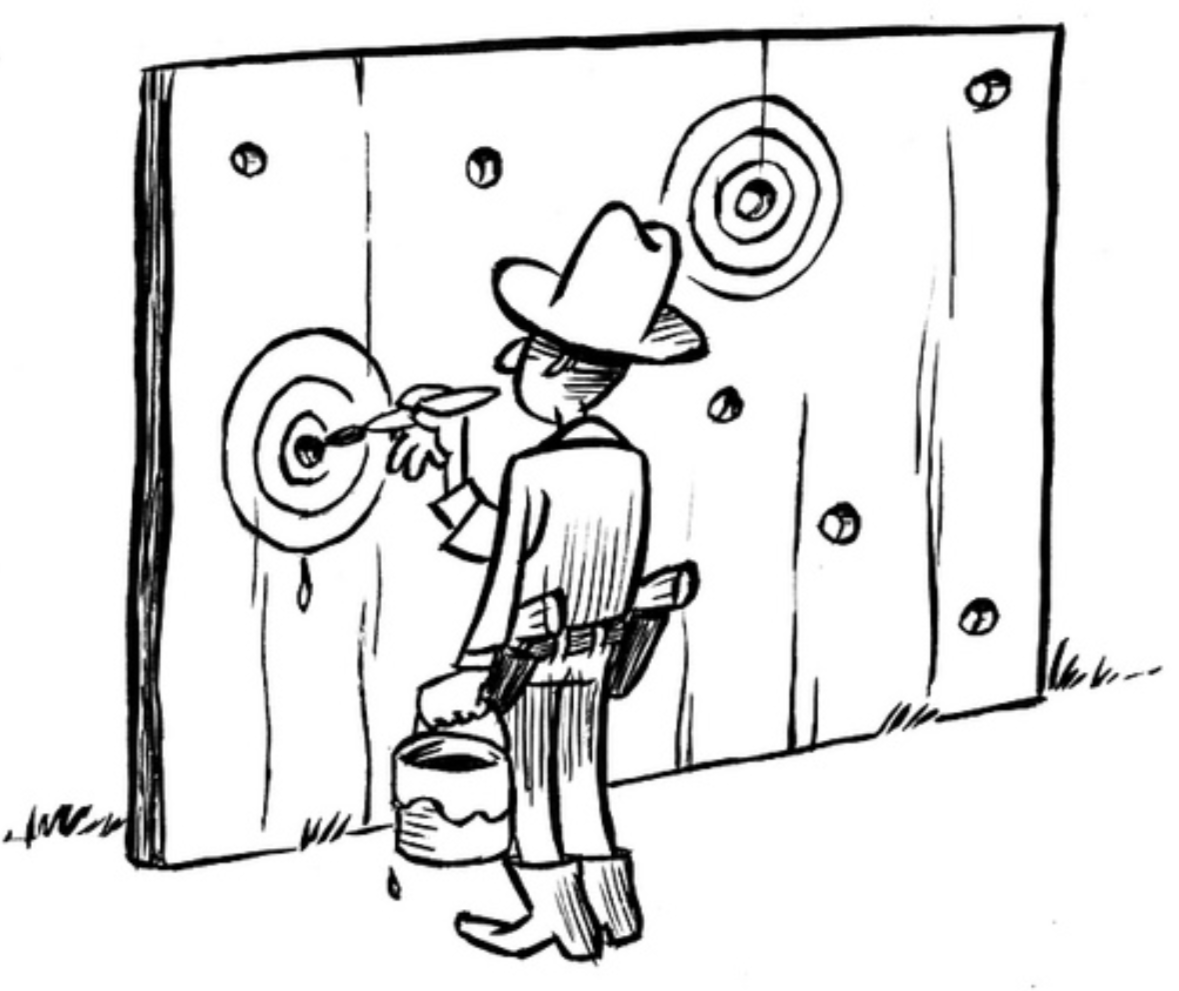
However, specific data can be better explained by theistic models, even if the theistic models are false. In fact, specific data can be better explained by models which we deliberately design to be false.

Take the model which I just thought of: 1-6-ism. A 1-6-ist believes that dice rolls of 6 are caused by preceding dice rolls of 1.

If I select for my data-set 3 pairs of dice rolls, all of which were 1 followed by 6, the 1-6 model explains the data set perfectly. The "dice rolls are basically random" model doesn't explain it very well at all. To get the true model to show its superiority over the false model, we have to include a larger data set. For a suitably large data set, the totality of available data will better conform to the truer model, even though specific data better conform to the false model.


Note - I'm not asserting that the theistic model is false, I'm pointing out that even if it was not just false but preposterous, the claim that "there is no data that naturalism does not explain at least as well as theism" would be false.

g s
  • 5,767
  • 2
  • 6
  • 24
  • 1
    I think you're misinterpreting the claim "there is no data that naturalism does not explain at least as well as theism". You're interpreting it to mean "there is no imaginable data", when in fact what's meant is "there's no existing data". The second interpretation is the one you kind of start talking about in your second paragraph. – TKoL Mar 04 '24 at 09:38
  • @TKoL I am responding to "there's no existing data". As long as a model is of such a type that any measurements conform to its predictions, there are some cherry-picked data sets such that measurements conform to that model's predictions better than they conform to the predictions of any other model. It's just a fact about statistics. – g s Mar 04 '24 at 15:17
  • I guess I consider cherry picked data to be borderline equivalent to invented data. I could cherry pick data to argue that a coin only lands on heads, by only looking at the instances where it lands on heads, or I could just invent data were it just lands on heads - effectively the same result. – TKoL Mar 04 '24 at 15:54
-1

The following paper is undoubtedly relevant to answering this question: Ockham on the Side of the Angels: Why a Classical Theist Shouldn't be Moved by Oppy's Argument from Simplicity, by Tyler McNabb and Michael DeVito:

Abstract

A common argument put forth by naturalists (including the prominent philosopher Graham Oppy) in support of naturalism as a worldview over theism, is to claim that naturalism is a simpler hypothesis. Theism posits the existence of everything that naturalism does, plus the existence of a theistic realm. Thus, all things being equal, via Ockham's Razor, naturalism should be preferred to theism. In this essay, we argue that the Classical Theist need not worry about the naturalist's Simplicity argument. Specifically, we argue that, the one holding to a scholastic metaphysics (i.e., potency-act distinction, participatory metaphysics, and existence-in-degree), in the end, will be the one with the simpler worldview.

The naturalism-versus-theism dialectic features numerous arguments and counter-arguments stemming from all areas of philosophy. One prominent battleground focuses on the concept of simplicity – specifically, trying to determine which worldview can account for the various features of our reality, while, at the same time, utilizing the fewest metaphysical (epistemological, semantical, etc.) concepts in order to do so. The idea being, all things being equal, the simplest solution is generally the best solution (a principle often termed ‘Ockham's Razor’).

Specific to the natural-versus-theism debate, Graham Oppy remarks, Although theists differ in the ways in which they depart from naturalism, there is a common feature to theistic departures from naturalism. In every case, theists differ from naturalists by believing in something additional: either believing in one or more additional intelligent agents, or believing in one or more additional forces or powers, or believing in one or more additional non-natural properties of the universe… From the standpoint of the naturalist, the theistic beliefs of the theist are pure addition; and, from the standpoint of the theist, the naturalistic beliefs of the naturalist are pure subtraction… In this case, if all else is no better than equal, then there is clear reason to prefer naturalism to theism. For, if all else is no better than equal, then there is no reason to have the additional theistic beliefs. (Oppy, 2018: 2)

As Oppy proceeds to explain, while naturalism is committed to: (1) an account of the natural universe and (2) the natural universe is all that exists; theism, in contrast, is committed to (1) plus (2*) there exists a theistic realm, and (3) the natural realm and the theistic realm are all that exists (Ibid). Thus, all things being equal, via Ockham's Razor, one should favor naturalism over theism.

Let's grant that theoretical simplicity is determined, at least largely, by metaphysical simplicity.1 That is, in comparing hypothesis1 over hypothesis,2 all things equal, whichever hypothesis endorses a more modest ontology should be preferred. And let's even grant that postulating a multiverse in order to accommodate fine-tuning is ontologically simpler than a hypothesis that postulates God and one universe at the level of ultimate reality. While this second assumption doesn't compart with our intuitions about simplicity, we assume it for the sake of argument.

We argue still, that the already committed2 Classical Theist shouldn't find Oppy's argument from simplicity compelling. The proponent of the type of Classical Theism that we have in mind is going to endorse the potency and act distinction, she is going to endorse a participatory metaphysics, and she's going to think that existence comes in degrees. The familiar potency-act distinction distinguishes between the way things are and the way things could potentially be. For example, the coffee on Mike's desk is warm, but it has the potential to be cold (say, if Mike let's it sit on his desk overnight), or the potential to be boiling hot (perhaps Mike rewarms it in the microwave for too long). Potentialities (coldness, hotness, sharpness, dullness, roundness, flatness, etc.) are real features of objects (coffee, pencils, balls, etc.) that have yet to be actualized. Classical Theists think that behind all change is ultimately being that is simply pure act.

By a participatory metaphysics, we have in mind the view that there is a distinction between existence or esse, and essence.3 (For example, the Classical Theist thinks that Pikachu has an essence, but yet, lacks existence.) Existence is what is fundamental to ultimate reality. Unless one's essence is to exist, one's essence has to come together with existence and participate in it. Essences which come to exist in this way, can be said to have derivative existence. These essences can be said to exist, but they exist to some lesser degree. Having said all of this, we can now see why the Classical Theist (at least of the stripe mentioned) shouldn't be convinced by Oppy's argument.

Traditionally, ultimate reality is what is of concern in the debate between theism and naturalism. By ‘ultimate reality’, we simply mean the correct account of the nature of everything or of all being that exists at the highest degreed level of reality. Generally, for naturalists, all objects of our experience, such as humans, houses, and stars, are part of ultimate reality. The Naturalist is then committed to the existence of composites (act and potency compounds) as features making up ultimate reality. The Classical Theist, however, denies this. These things exist but not as features that make up ultimate reality. Objects exist in a derived and less fundamental sense. As to what exists in ultimate reality, theism simply postulates that there is pure act. Theism is then simpler.

Now, let's say that the naturalist gives up on debating about what one posits at the level of ultimate reality. Instead, she will settle for considering what is simply fundamental to her worldview. Recently, several theists have made a similar move. Perhaps she will argue that the existence of quarks or perhaps an initial singularity is what is fundamental to her view. There's no need to worry about anything else she says. Nonetheless, quarks or an initial singularity would still be reducible to act and potency compounds. In contrast, what is fundamental to the Classical Theist's view is simply pure act. Either way you slice it then, the Classical Theist won't see the need to abandon ship.

OK, the naturalist says. Let's not determine simplicity by way of what's fundamental to the respective hypotheses, but rather, let's determine which hypothesis is simpler by an analysis of all things one postulates, even if those things don't makeup ultimate reality. Perhaps this is how we should have understood Oppy this whole time. The naturalist postulates composites while the theist postulates both pure act and composites. Naturalism is therefore simpler.

Not so fast. This might move the naturalist, but this scenario won't get off the ground for the Classical Theist who endorses participatory metaphysics. Recall that the Classical Theist thinks that in order for some essence to exist, it must participate in existence itself. If the theist equates pure existence with pure act (as they normally do), then she will take it that the naturalist is already committed to both the existence of pure act and the existence composites. Of course, the naturalist might not be convinced that pure act just is God, as there is the whole problem with the second-stage of arguments for God's existence. We needn't get into all of this here. Nonetheless, the question that is being debated is whether an already committed Classical Theist should be convinced by Oppy's argument. If the Classical Theist assumes participatory metaphysics, then she needn't concede of a possibility where one can have existent things without existence itself. Participatory metaphysics is part of the Classical Theist's background knowledge, k. The Classical Theist likely thinks alternative metaphysics of existence are incoherent and, for completely independent reasons, implausible. To be moved by Oppy's argument from simplicity, what is needed are additional reasons to reject k. Only upon developing these reasons, will the Classical Theist find Oppy's simplicity concerns more credible.

Now, we want to clarify, that our response here shouldn't be seen as an argument for Classical Theism. We recognize that one could argue that if we assume the sort of participatory metaphysics discussed here, then we are already assuming the existence of God and the simplicity concerns become irrelevant. Now, we don't think this is necessarily the case due to there being a second-stage or gap problem from arguing from pure act to God. But as mentioned earlier, this needn't concern us here. What's important is to clarify that we are simply arguing that Classical Theists who accept the aforementioned theses won't find Oppy's Simplicity argument compelling because of the metaphysics they assume. In fact, the Classical Theist might be turned off (perhaps rightly) to the idea that we can even in principle prove or disprove God's existence by way of looking at Classical Theism as a scientific hypothesis. Since God is, after all, not a thing or an object of the universe, why think that scientific methodology plays a role in establishing what grounds the realm of existent things? Nonetheless, even if we concede that such methodology is appropriate, we have shown why Oppy's argument from simplicity shouldn't move the Classical Theist of the stripe that we have imagined.

Mark
  • 4,725
  • 1
  • 18
  • 50
  • 1
    This argument assumes its premise, as conceded in the ultimate paragraph; this is a soothing paper for people with certain pre-existing beliefs, not a logically-valid refutation of Oppy's position statement. It's interesting food for thought, but nowhere near a complete answer. – Corbin Mar 05 '24 at 23:21
  • @Corbin Each theory assumes its premises. That's not a problem. That's what theories do. Most of Oppy's work is about comparing theories (aka worldviews) in terms of their theoretical virtues, where a theory is defined as a set of premises and the beliefs that are logically entailed by those premises. (Watch Oppy himself explaining all of this in detail for about half an hour here, or feel free to skip to this second if you want to skip all the laying of groundwork up to that point). – Mark Mar 05 '24 at 23:41
  • @Corbin What the paper I referenced is doing is simply arguing that the specific theistic theory being described is theoretically more virtuous than naturalism. It's just concerned with theory comparison, not with defending premises. – Mark Mar 05 '24 at 23:43