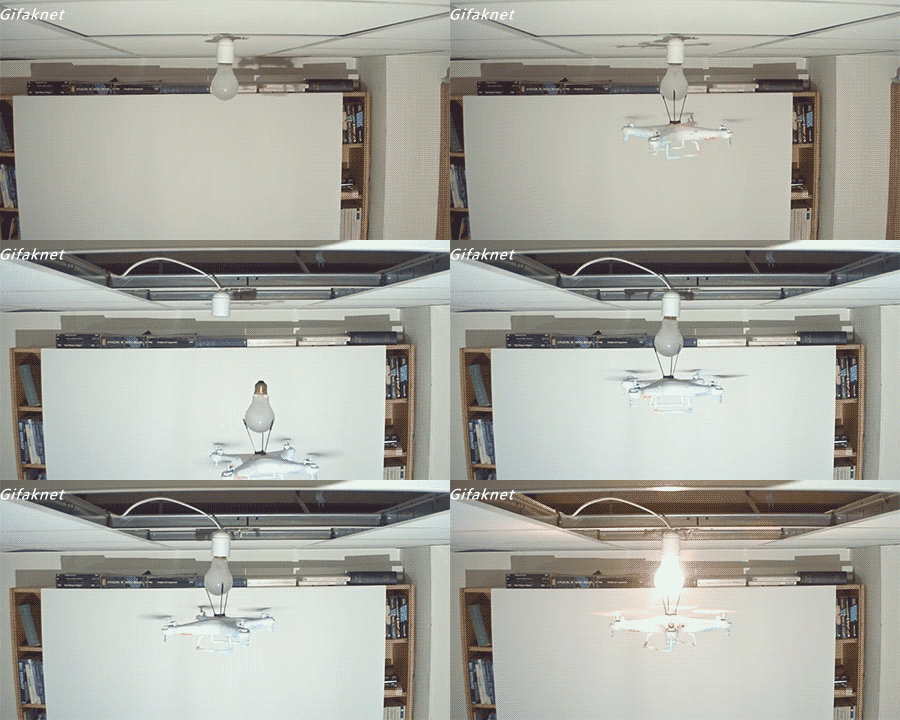
One possible term is Overengineering.
Overengineering (or over-engineering) is the designing of a product to be more robust or complicated than is necessary for its application....In one form, products are overbuilt, and have performance far in excess of needs (a family sedan that can drive at 300 km/h, or a home video cassette recorder with a projected lifespan of 100 years)....Alternatively, they may be overcomplicated – the design may be far more complicated than is necessary for its use, such as a modern text editor asking whether files should be saved in ASCII, EBCDIC or various multi-byte formats....
Source: Wikipedia.
Using a drone to replace a light bulb is certainly "far more complicated than is necessary", and a drone that is purchased for the purpose of being a light bulb changer would be especially well described by that phrase.
Kerievsky (2002), speaking specifically about software engineering but in a way applicable to robotics, writes that overengineering happens when one engineers "in anticipation of needs that never materialize".
Source: Joshua Kerievsky, April 01, 2002, Stop Over-Engineering!, Dr. Dobb's Journal.
A drone-based light bulb changing system could be envisioned as becoming practically useful later if a need arises to change light bulbs located in inconventiently high or inaccessible locations (such as the roof of a stadium, or on the outside of a very tall flagpole), but the majority of people do not encounter such situations frequently, if at all.