If a round square exists as a concept, does it mean it exists? So, a square is round because it exists as a concept. But why do some people think "sqaure is round" is a false statement rather than a true statement even if a square is round in concept.
Asked
Active
Viewed 121 times
-1
-
3Because round square is not a coherent concept with which even conceptual existence is usually associated. One needs more than a grammatical string of words to make a concept. There are theories of incoherent concepts, but "exists" is typically not applied to them, see SEP, Nonexistent Objects. – Conifold Nov 17 '23 at 00:27
-
1"Robert killed his landlord" exists as a concept. So, Robert killed his landlord because it exists as a concept. But why do some people think "Robert killed his landlord" is a false statement rather than a true statement even if Robert killed his landlord in concept? And why aren't we, like Robert, all hangged at once? There is a fundamental mistake in the idea that "i can put words together to describe something" or "i can imagine something" makes that something true. Or, we all need to be judged for our imaginary crimes. – armand Nov 17 '23 at 01:11
-
Does this answer your question? Can we describe round square, which doesn't exist? – Mauro ALLEGRANZA Nov 17 '23 at 07:10
-
You are not thinking clearly. There are two labels being used in your question, as follows... 1) 'Square' means a polygon with four equal straight sides and equal diagonals. 2) 'Round square' means an absurd self-contradictory notion with no counterpart in reality. You are confusing the two labels. The shape referred to by the usual use of the word square, namely as defined in 1) above is not round. – Marco Ocram Nov 17 '23 at 07:57
-
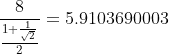
 5.9103690003 - 3.14159 = 2.7687790003 Off by around 12% (error). Is this an acceptable level of error for pi for you? If yes, there are round squares and , if I had the time, I'd love to visit your world.
– Agent Smith
Nov 17 '23 at 04:07
5.9103690003 - 3.14159 = 2.7687790003 Off by around 12% (error). Is this an acceptable level of error for pi for you? If yes, there are round squares and , if I had the time, I'd love to visit your world.
– Agent Smith
Nov 17 '23 at 04:07
-
If PI was 3.00 then circles would be hexagons. But, then, we probably wouldn't have invented the wheel. Or else roads would be those special wavy shapes... – Scott Rowe Nov 17 '23 at 13:09

 5.9103690003 - 3.14159 = 2.7687790003 Off by around 12% (error). Is this an acceptable level of error for pi for you? If yes, there are round squares and , if I had the time, I'd love to visit your world.
– Agent Smith
Nov 17 '23 at 04:07
5.9103690003 - 3.14159 = 2.7687790003 Off by around 12% (error). Is this an acceptable level of error for pi for you? If yes, there are round squares and , if I had the time, I'd love to visit your world.
– Agent Smith
Nov 17 '23 at 04:07
2 Answers
1
There are a few different views about what classes as existent. Plato for example believed that numbers truly existed as abstract objects, whereas most people believe that numbers are just ideas in our brains so it depends on who you're asking. You should look into platos theory of forms.

Richard Bamford
- 875
- 4
- 11
0
If a round square exists as a concept, does it mean it exists?
Yes. Shapes are concepts, not physical objects. So if a round square exists as a concept, then it necessarily must exist. It is equivalent to asking "if C exists, does that mean it exists? The trickiness stems from the fact that we often mean "exists" as in "exists in the physical world, but for abstract concepts like shapes, we simply mean "exists" as referring to conceptual existance.
So, a square is round because it exists as a concept.
No, because we've agreed that a square is not actually round by definition. A rose by any other name would smell as sweet.
But why do some people think "square is round" is a false statement rather than a true statement even if a square is round in concept.
A square is only round in concept if you define square in a new way that one one else is using. If you use the definition that everyone else uses, then the square is not round by definition, which is why people disagree.

BigMistake
- 162
- 5
-
As it’s currently written, your answer is unclear. Please [edit] to add additional details that will help others understand how this addresses the question asked. You can find more information on how to write good answers in the help center. – Meanach Nov 17 '23 at 08:57
-
1It seems perfectly clear to me, but maybe that's just my definition. – Scott Rowe Nov 17 '23 at 13:11
-
@Meanach Can you provide a suggestion for how it could be clarified? – BigMistake Nov 18 '23 at 00:22
-
The questioner needs to expand on the relation between conception and reality. Then expand on the relation between words and reality. Then on categories of statement - true, false, paradoxical. Overall, it is unclear what the philosophical significance of the question is. – Meanach Nov 18 '23 at 12:56